
Improve a Small Closet with Vertical Organizers and Light
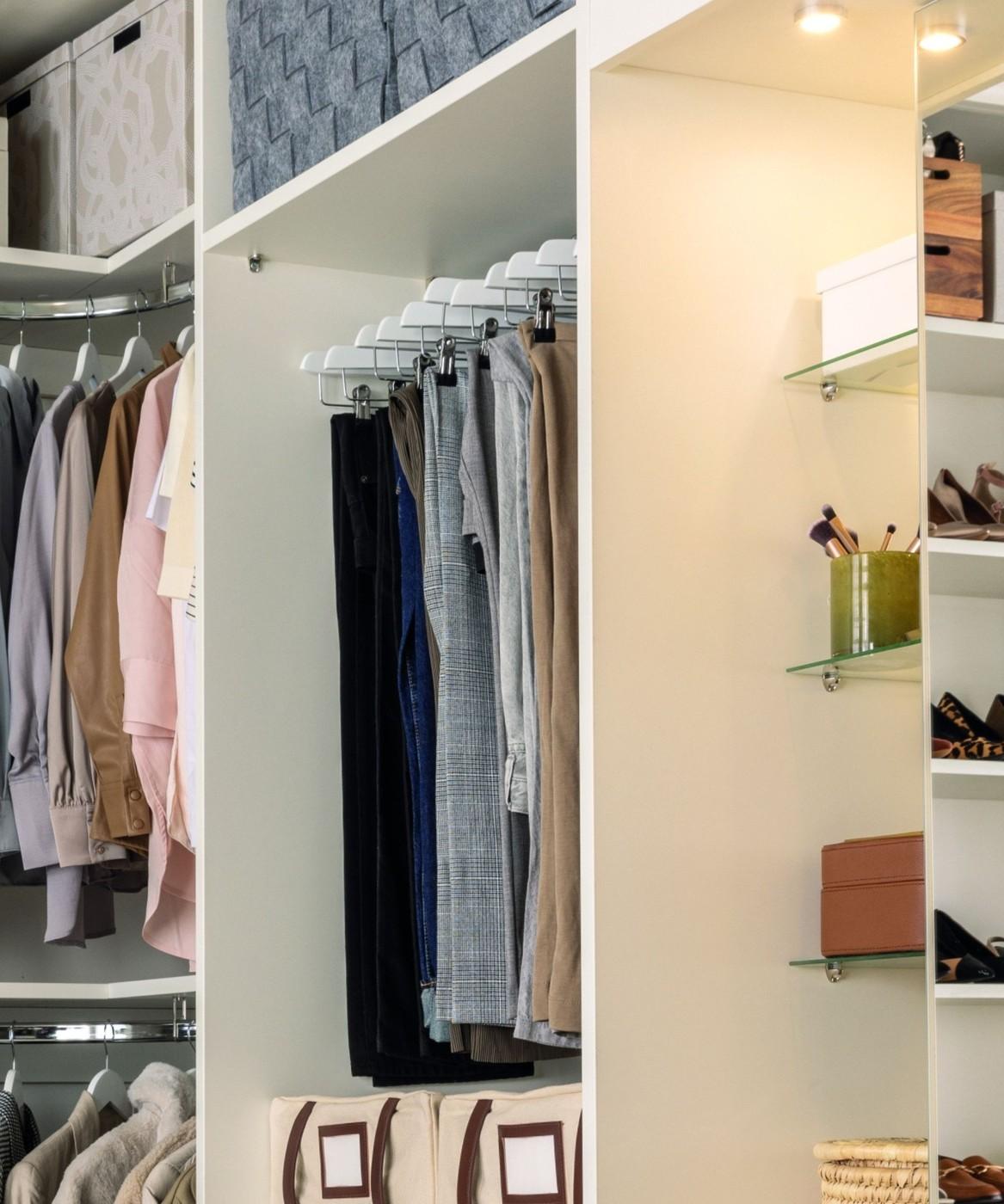
Real Homes' small-bedroom closet guide recommends using vertical organizers where height is available but width is limited. Over-the-door options can hold smaller items without taking up another section of the floor, helping the closet support more clearly separated categories.
The article also identifies lighting as a way to make the confined storage easier to use. Choose a suitable installation and check door clearance before adding accessories. Visibility and access matter as much as capacity, because items are harder to maintain when they disappear into a dark, crowded space.
Choose a lighting arrangement suited to stored textiles
Designer Kanika Khurana discusses LED strips, pucks, and rods, including dimmers or sensors. Compare a fitting’s intended application, power supply, clearance, and installation instructions before placing it near clothing. Keep switches or charging points accessible. Better visibility can make getting dressed easier, but lighting does not increase the closet’s physical dimensions or resolve an overfilled rail.
Make visible storage a considered choice
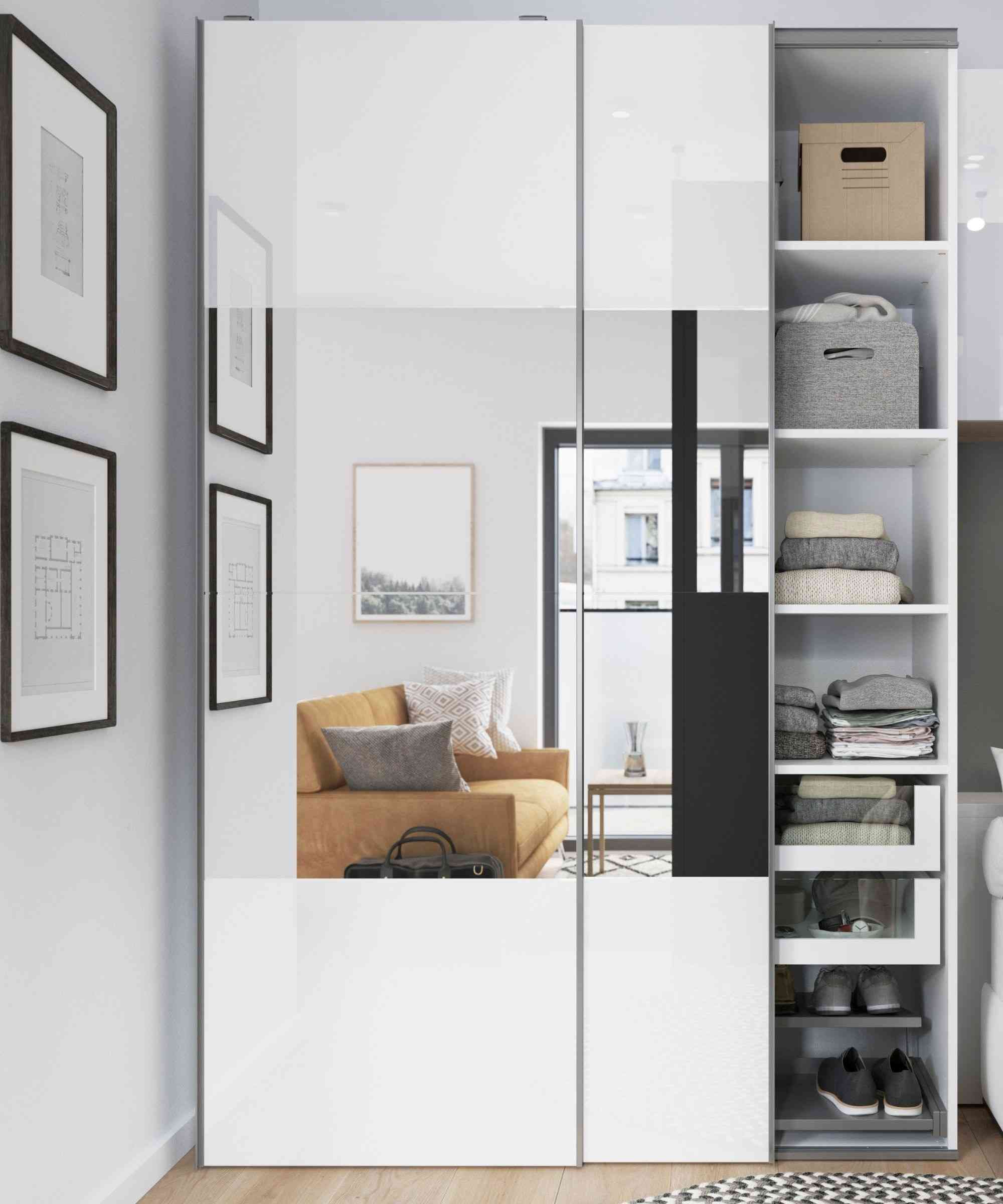
Glass fronts reveal the contents, while mirrored doors can reflect the room without putting every garment on display. These are different visual effects. Changing a door panel involves its own construction and safety requirements, so use an appropriate finished system or qualified help rather than treating glass as a casual craft insert. A freestanding clothing rack is another option when a large wardrobe would not fit.
Check the reach and hanging length of added rails
The guide suggests extra clothes rods or extenders to use vertical space. Measure the garments and choose components designed for their load and support conditions. Keep long dresses or coats from bunching against a lower rail. The useful extra capacity comes from fitting the actual wardrobe collection rather than simply installing the maximum number of bars.
Compare storage on the door with the space behind it
The reference offers vertical organizers as one way to use a narrow closet's height. Measure the actual mounting position and the loaded pockets before choosing. Shoes, hats, and scarves occupy different depths and need different handling. Check that the door closes normally and that the organizer does not collide with clothing or drawers inside. If it holds outfits for the week, leave enough room to identify each group without taking several others out first. The useful gain is the clarity and convenience of the assigned category. A long list of pockets has little value if the upper ones are difficult to reach or the lower ones obstruct the door.
Distinguish glass, mirror, and added light by their effects
Kanika Khurana discusses glass fronts and LED sources, with a mirrored door as an alternative for people who prefer concealment. Transparent glass exposes the interior, while a mirror reflects the room rather than revealing the stored clothes. Decide which relationship is desirable before planning a door change. Replacing a panel with glass is a fabrication and support question that the article's general suggestion cannot resolve. Similarly, strip, puck, and rod lights require products suitable for the intended mounting and nearby materials. Sensors and dimmers can make controls convenient where the selected system supports them. Compare the useful visibility of the actual contents instead of assuming a dramatic glow automatically improves access.
Use another rod or rack only when the clothes can occupy it
An extra rod can create another hanging level, but needs suitable load support and sufficient length below it for the intended garments. The source's suggestion of reusing a curtain rod should not replace verification of the component's suitability for clothing storage. A freestanding rack is another alternative, especially where a large wardrobe is unnecessary, but include its full loaded width and the position of a moving or wheeled base. Open clothing also becomes part of the room's appearance. Compare that with the actual household's preference for display or concealment. Choose the smallest complete arrangement that keeps clothes accessible and leaves the bedroom's other activities practical. Test the proposed layout with doors open and a garment being removed before deciding that the next vertical layer is useful.
References
- Small bedroom closet ideas — 5 stylish solutions experts love. Real Homes; Eve Smallman.
Real Homes' small-bedroom closet guide recommends using vertical organizers where height is available but width is limited.


Leave a Comment