
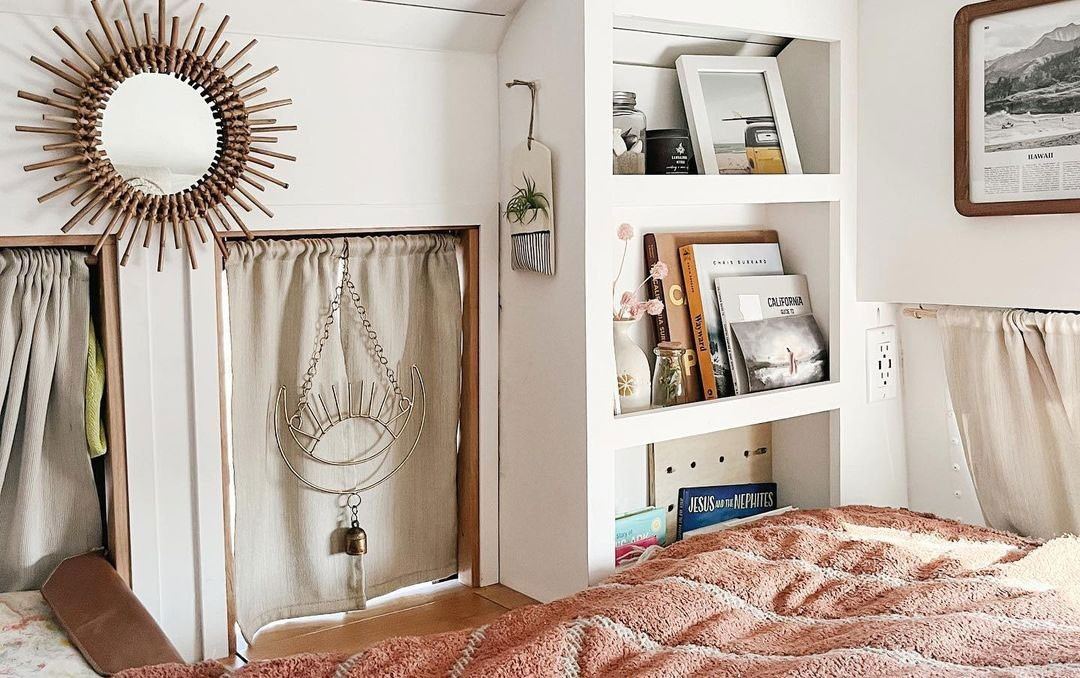
Borrow Area-by-Area Organization from Tiny-Home Living
Tiny-home residents interviewed by Real Homes recommend first examining what is genuinely needed. Reducing the amount to track makes organization easier, especially where every misplaced object has a noticeable effect on the living space.
They also suggest tackling one area at a time so the need for baskets, containers, and drawer dividers becomes clear. The article includes specialized bus-home ideas, but its broader method is adaptable: assess the contents, understand the activity, and then choose the organizer. A small apartment benefits from the same deliberate sequence.
Borrow the routines without copying every vehicle modification
Lindsey White describes labeled toy bags that can be brought out in small groups and returned beneath the couch. She also found drawer spacers and different folding methods useful for children’s clothing. Those practices can translate to an apartment because they clarify categories and make cleanup manageable. Adapt the bag size, label, and retrieval position to the household rather than reproducing the exact bus layout.
Distinguish fitted projects from simple organization
Caleb Brackney’s bus includes inventive suspended jar storage and customized lighting. These examples show how a purpose-built interior can use unusual spaces, but they are not complete installation instructions. Glass overhead, magnets, electrical work, and movement in a vehicle introduce requirements beyond the photograph. Begin with an appropriate organizer or professionally specified fitting if the construction is uncertain. White also describes reviewing small areas periodically instead of waiting for the whole home to become unmanageable. A short check of the problem drawer or toy storage keeps the system connected to changing needs without requiring a full reset every time.
Borrow the area-by-area method before the custom construction
Lindsey White describes reviewing possessions and organizing one area at a time. That approach can transfer to an apartment without copying a bus conversion. Pick a category with a clear boundary, such as the kitchen utensils or a group of children's clothing, and decide what is genuinely used. Measure the retained group before choosing spacers, baskets, or another organizer. A small success gives useful information about the household's routine and the space actually required. The source's mobile homes have particular dimensions and circumstances, so their storage examples are demonstrations of problem solving rather than complete specifications for another building or vehicle.

Distinguish an inventive idea from a verified installation
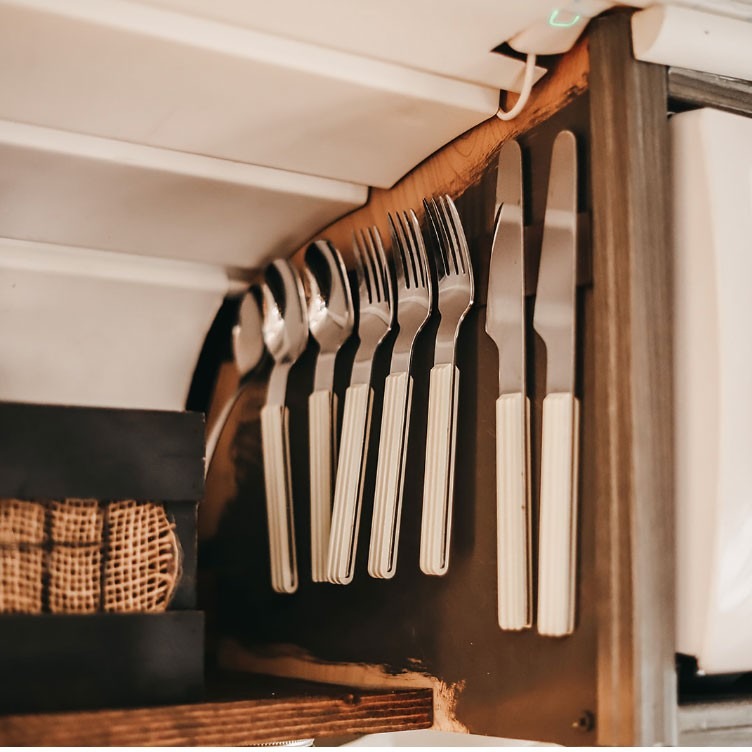
Caleb Brackney describes magnets and suspended jars as ways to use limited kitchen space. The transferable observation is to examine the unused relationship between a shelf and the area beneath it. Any actual fixture still needs suitable support, secure contents, and compatibility with its environment. A moving vehicle adds constraints different from a stationary apartment. The source also recounts a custom jar-light feature, but does not provide the electrical and thermal specification needed to reproduce it. Choose a purpose-made suitable fitting or an appropriately designed installation rather than treating the anecdote as complete instructions. Creativity is useful when the final arrangement remains dependable in its actual setting.
Make labels and folding support a repeatable return routine
White found that experimenting with folding methods and drawer spacers helped the family's clothing fit its available storage. Test one category rather than assuming a single folding technique suits every garment. Labels on toy bags can clarify what is taken out and where it returns; limiting the number of groups in use can also simplify clearing up. The important result is that everyone can understand the system. Review the areas that begin overflowing before the whole room becomes difficult to manage. A recurring small adjustment may be more practical than waiting for a complete reorganization. Keep the methods that fit the household's habits and abandon elaborate arrangements that are harder to maintain than the belongings they contain. For example, compare how a child retrieves and returns one labeled toy bag before expanding the approach across every play category. The complete sequence is a better test than the appearance of the closed bags.
References
- 7 small-space organization tips from van dwellers and tiny home experts. Real Homes; Camille Dubuis-Welch.
Tiny-home residents interviewed by Real Homes recommend first examining what is genuinely needed.


Leave a Comment