
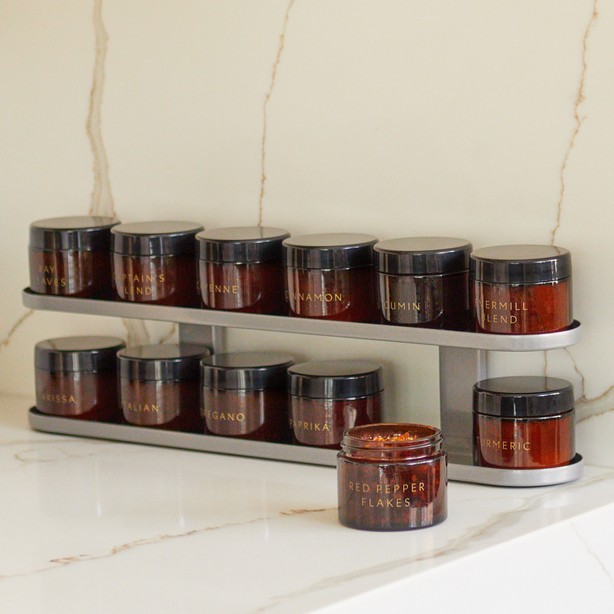
Let Practical Storage Contribute to the Decor
House Beautiful's organizer-inspired selection combines storage with decorative appeal. Examples include glass spice stackers, entryway catch-alls and compartmentalized pill organizers. The emphasis is on pieces that make commonly used belongings easier to manage while fitting the surrounding room.
Choose a container for a defined task rather than buying it only for its appearance. A useful storage piece should improve the daily routine and have an appropriate position, whether it sits on a vanity, inside a cabinet or near the entrance.
Evaluate the actual task behind the attractive object
The article’s examples include stackable glass spice containers, a sculptural entrance catchall, and a compartmentalized pill organizer. These are different jobs rather than interchangeable decorative accessories. For spices, check whether labels remain visible and whether the stacked arrangement can be handled comfortably. For an entrance tray, identify the objects that actually arrive each day and choose a position that will not obstruct the door.
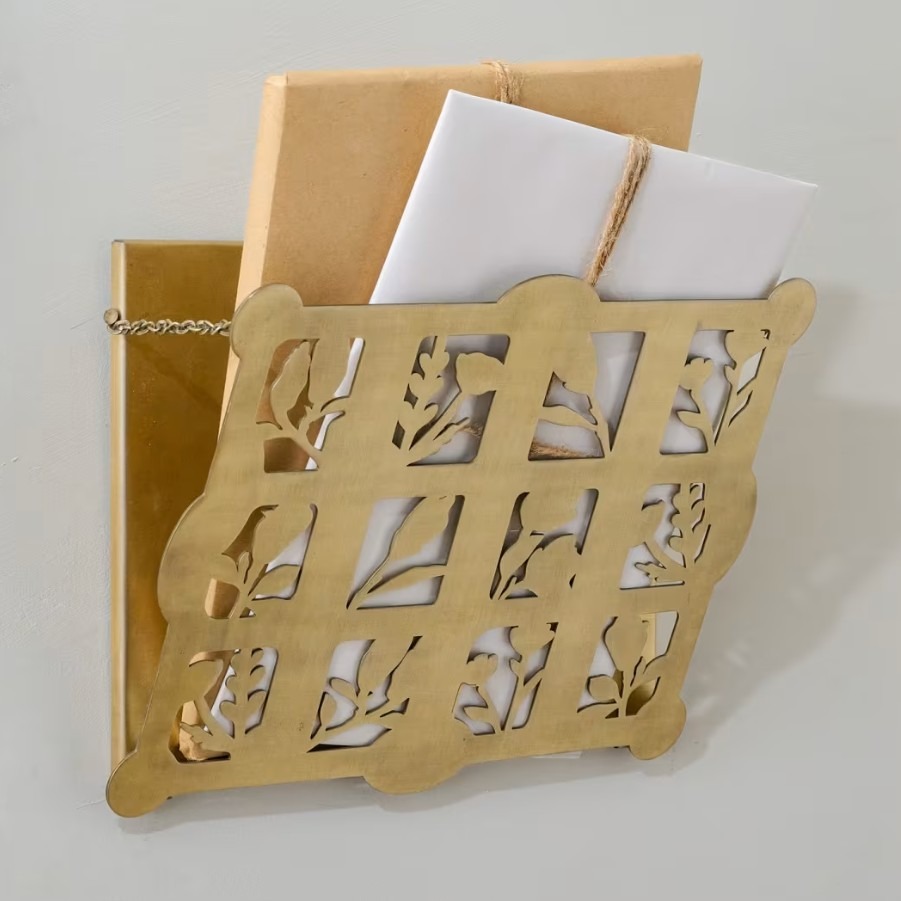
Check access, materials, and capacity before purchasing
A container that looks appealing in a photograph may be too deep for a drawer or too small for the usual contents. Measure its intended position and compare the opening, internal divisions, and cleaning instructions with the task. If medication is involved, follow the medicine’s storage requirements and obtain appropriate professional advice before moving it out of its packaging. Appearance alone does not establish suitability.
Treat the selection as inspiration rather than a product test
The available reference introduces organizer-inspired shopping examples but does not provide a complete comparative performance test. The evaluation steps here are editorial guidance for making a considered choice. Keep a useful existing organizer when it already works, and add a decorative replacement only when the change improves access or solves an identified problem.
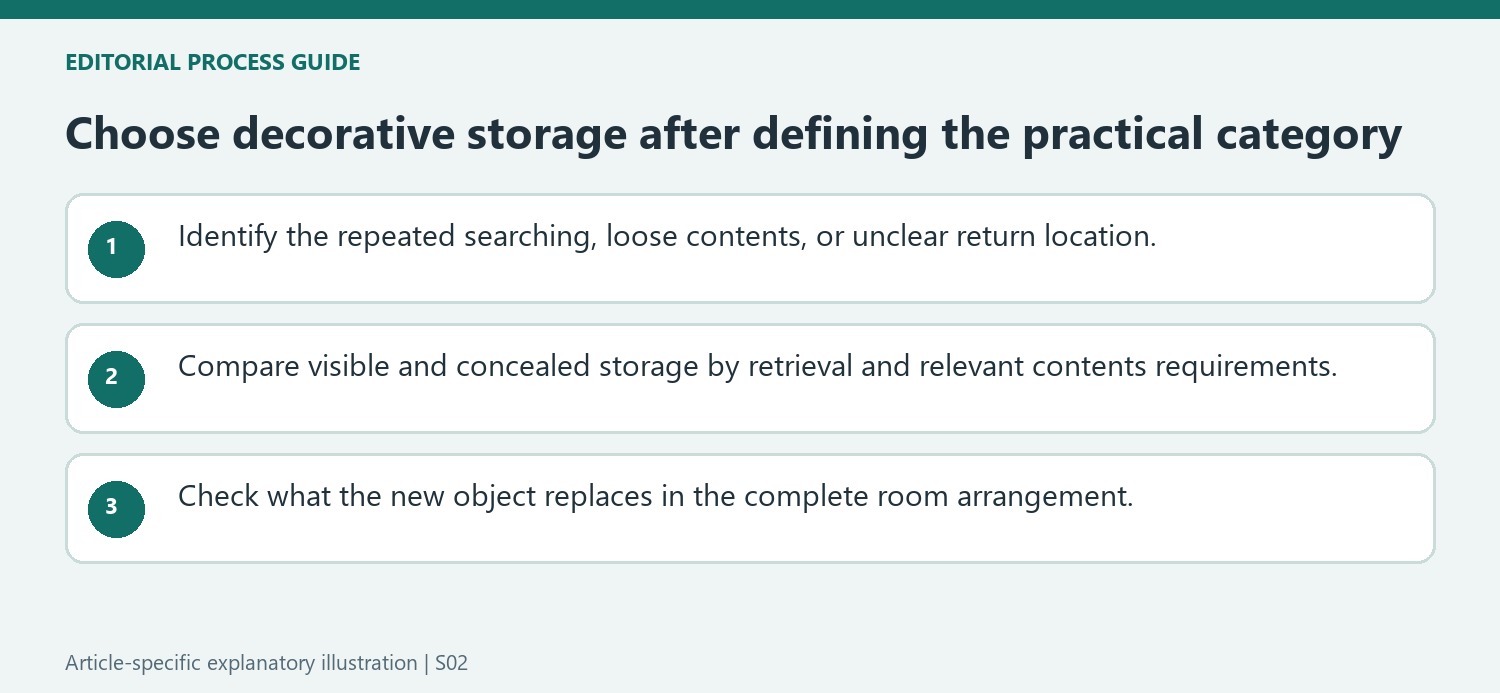
Begin with the practical problem behind the decorative object
The source presents organization pieces that can also contribute to a room's appearance, including spice storage and entrance catchalls. Select the problem first: repeated searching in a cabinet, loose departure essentials, or supplies spreading across a work surface. An attractive object becomes useful when its dimensions and access suit that specific category. A small catchall can clarify where keys belong, but a collection of trays can divide the same clutter into several undecided piles. Compare the contents before selecting the material or silhouette. The article establishes an editorial shopping theme, not evidence that every featured form solves every household's organizing problem equally well.
Choose visible storage according to what remains understandable
Transparent or open storage makes contents part of the room, which can be helpful where the category is recognizable and regularly used. The source's spice example illustrates that relationship. Assess label visibility, retrieval, and the conditions appropriate to the contents before moving them into a decorative display. Closed storage may be more suitable for a mixed supply that does not benefit from remaining on show. The same comparison applies to a home-office organizer: it should support finding and returning the actual tools, not merely create an attractive arrangement for a photograph. Keep the work area usable when its ordinary papers and devices are present.
Assess the whole arrangement before buying another accessory
A finish can connect practical storage with retained furniture without requiring every item to match. Compare one proposed piece with the room and ask what it replaces. If it only adds another surface, the existing storage may need editing instead. Product references in an affiliate shopping feature should also be distinguished from independent performance testing; the captured source does not supply verified capacities or durability results for every item. Check current specifications and relevant instructions before choosing. For any specialized contents, use an organizer appropriate to their actual care requirements rather than letting appearance determine suitability. A considered purchase supports an established destination and a repeatable routine, leaving the room easier to use as well as more coherent to look at. Review that destination after several normal uses before extending the same idea elsewhere.
References
- 10 Ultra-Cool Storage Pieces Professional Organizers Would Buy Over and Over. House Beautiful; Catherine DiPersico.
House Beautiful's organizer-inspired selection combines storage with decorative appeal.


Leave a Comment