
Find Bedroom Storage in Overlooked Areas
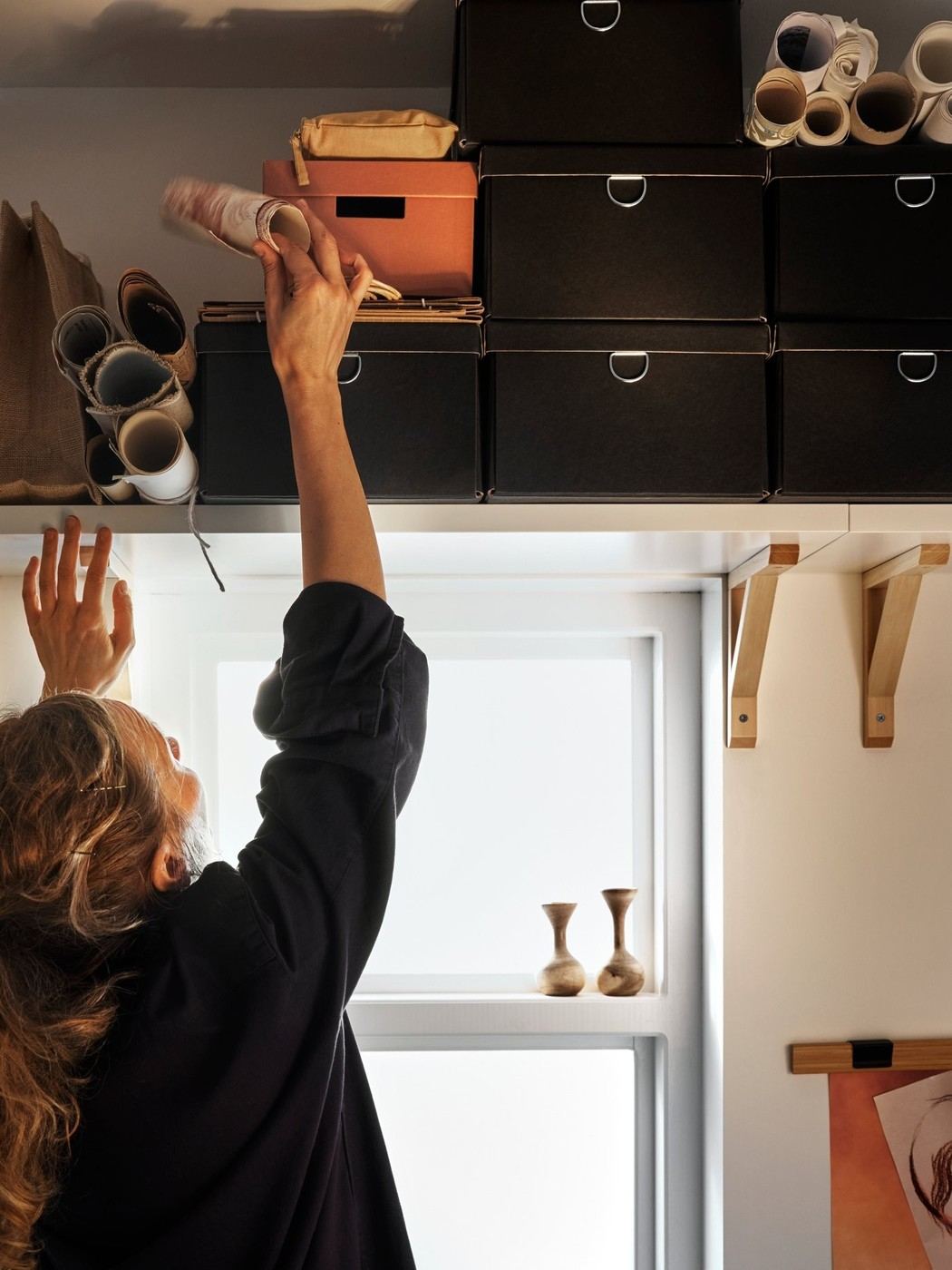
IKEA's extra-storage guide identifies spaces that can be missed when a bedroom feels full. Shelves above a window can hold items that are not needed daily, while lidded boxes keep those less accessible belongings together and protected from dust.
A shelf behind the bed can serve as a broad bedside surface, with a row of boxes or baskets below. Under-bed storage offers another familiar option. Check support, head clearance, and access before installing shelves so the additional capacity does not make the room harder to move through or use.
Use the height above a window for occasional belongings
The IKEA example places shelving above the window and groups less frequently needed objects in lidded boxes. This uses a position that is inconvenient for daily retrieval, so it is better suited to light, occasional contents. The shelf, brackets, wall, and fixings must suit the intended load. Keep curtain operation and safe access in mind rather than treating every high wall area as available storage.
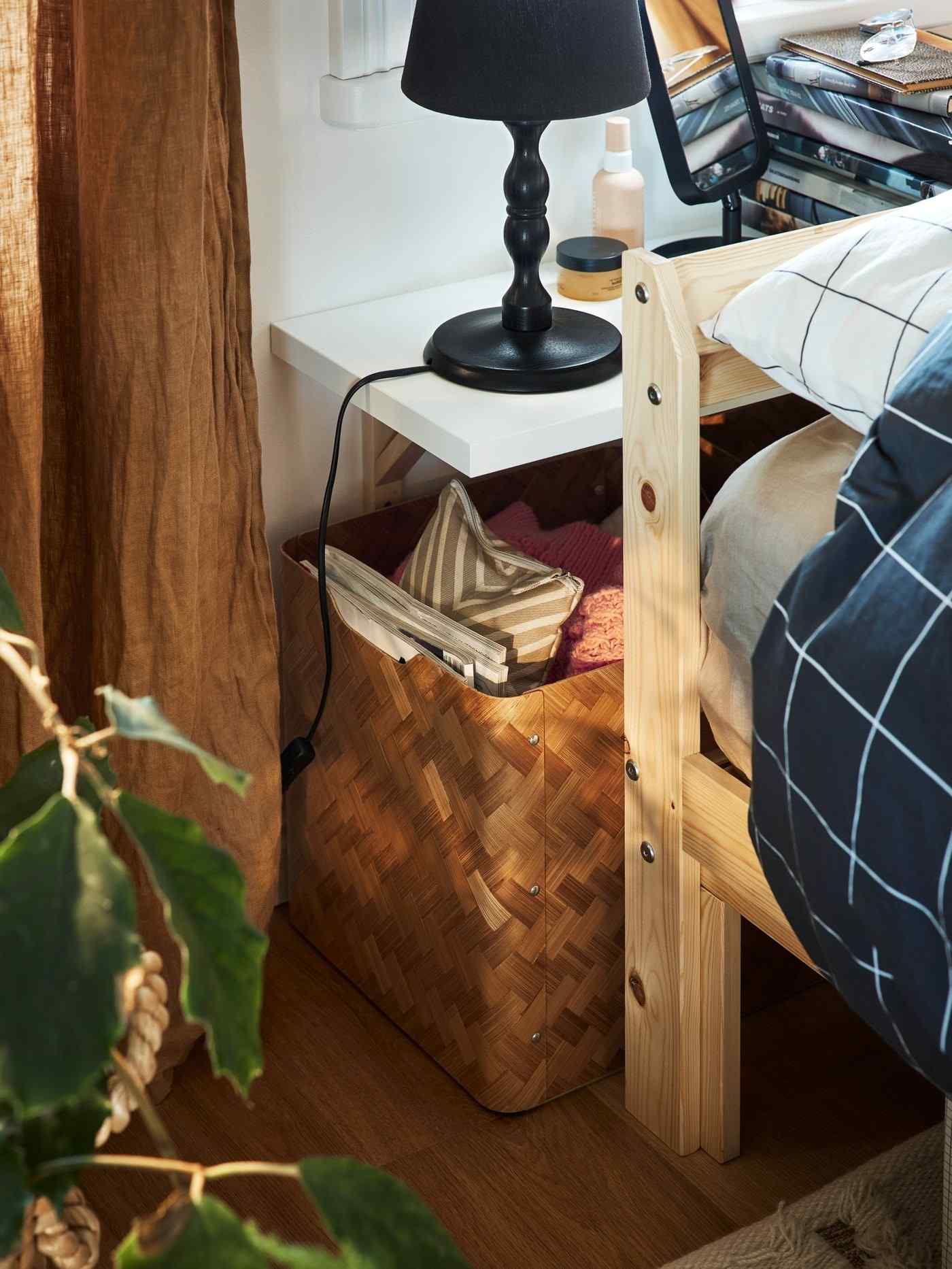
Make a bedside surface work across the available width
A shelf behind the headboard can act as a broad bedside landing place, with boxes or baskets arranged below. Compare the bed position, pillows, lamps, and walking route before adapting the idea. The extra surface should not compromise the bed’s support or leave objects likely to fall behind it. A storage bench or footstool provides another opportunity when it also serves a useful seating purpose.
Keep soft storage manageable
The source also suggests lightweight under-bed cases and rolling a spare duvet inside a cover as a temporary bolster. Avoid overloading a fabric case just because more can be squeezed inside. Protect bedding according to its care requirements and check that retrieving it remains easy. These are ways to organize existing belongings, not reasons to fill every available gap.
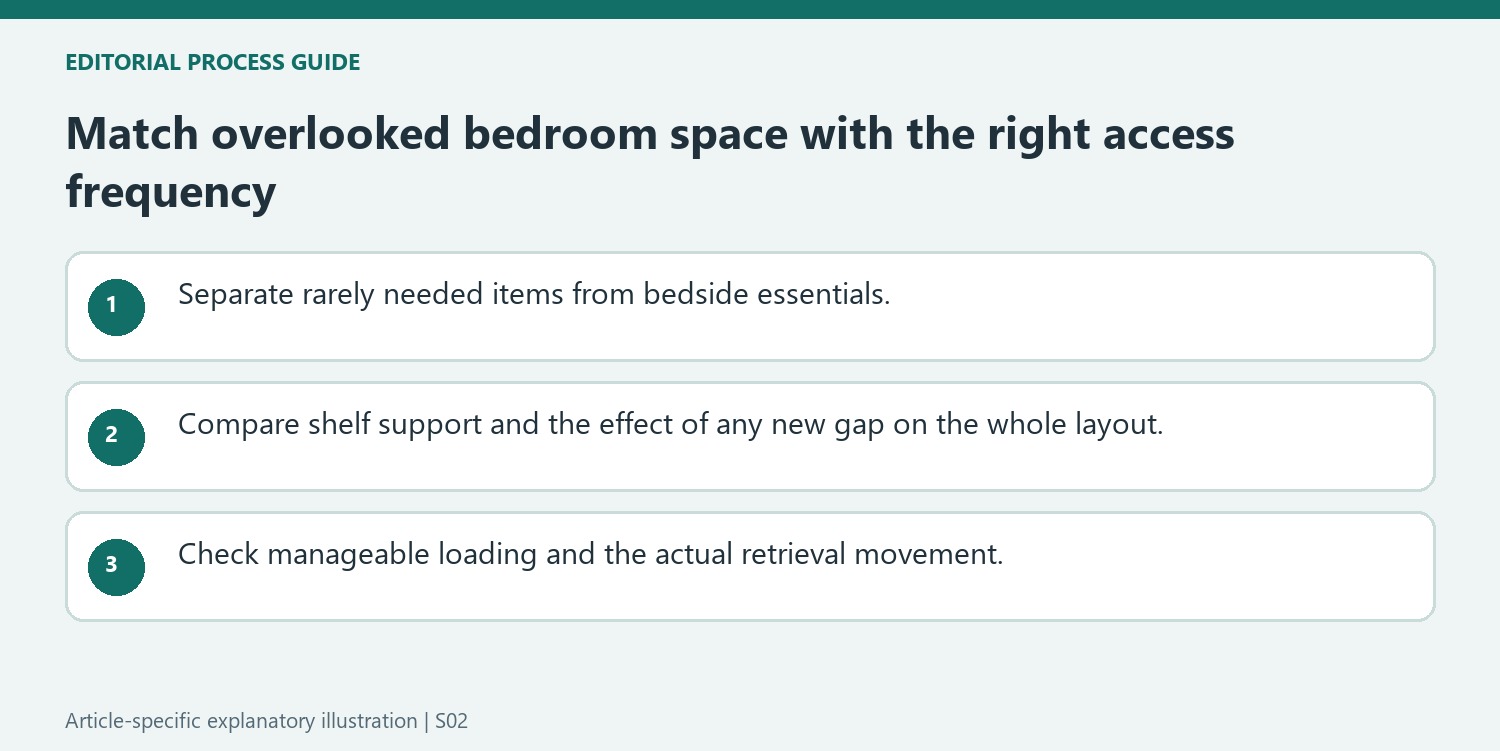
Evaluate overlooked space by the effort of reaching it
The IKEA reference proposes shelves over windows for items that are not needed immediately. Begin with access frequency and the actual wall conditions, rather than interpreting every empty patch as a suitable mounting position. Higher storage needs an appropriate retrieval method and secure support. Boxes should suit the objects stored inside and be manageable when moved. A shelf behind the head of the bed serves the opposite purpose: it puts reading materials and lamps close to the sleeper. Compare those two locations by their different tasks. The best destination depends on how often and from where the contents are used, not simply on which gap looks largest.
Review the bed-side gap as a complete arrangement
A full-width surface behind the headboard can supply bedside space while leaving room for containers below. Draw the whole assembly with the bed, electrical access, and any curtain or window movement. Pulling the bed away from the wall also changes the floor available at its foot. Check how the lower boxes can be reached, since a useful cavity is not necessarily an accessible one. An under-bed case needs a similar test: the source specifically recommends manageable loading rather than filling it as heavily as possible. Compare the occupied furniture and the extraction path together before treating either approach as a gain.
Distinguish stored bedding from a purpose-made cushion
The final source idea rolls a spare duvet within a cover to create a supportive decorative form. It is a temporary way to contain bedding, rather than a claim that the resulting bundle has the construction or care properties of a manufactured cushion. Keep the bedding clean and appropriately dry, and consider whether it is convenient to unroll when actually needed. A storage bench or footstool offers another type of concealed location but adds its own footprint and opening requirements. Choose the option that simplifies the room's routine. Several small storage tricks are useful only when their combined arrangement still leaves the sleeping area easy to reach, make, and clean around. Check the complete room before filling every available gap.
References
- Easy tips for extra bedroom storage. ikea.com.
IKEA's extra-storage guide identifies spaces that can be missed when a bedroom feels full.


Leave a Comment