
Make Entrance Storage Look Intentional and Welcoming
Give the hardworking piece a visible identity
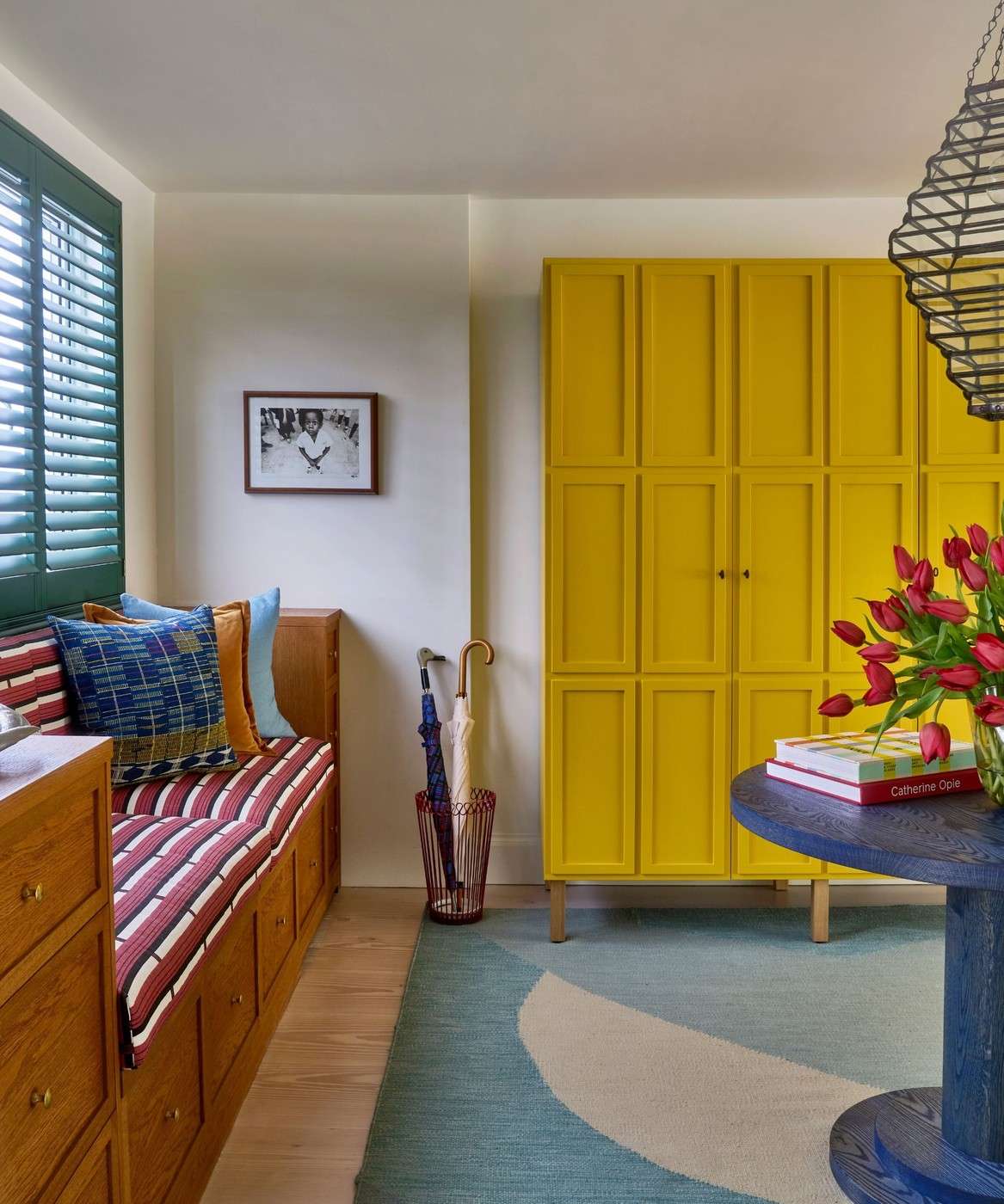
Entryways need to hold coats, shoes, bags, and umbrellas while still feeling welcoming. The source shows a family entrance where a freestanding yellow cupboard works alongside fitted storage. Its color makes a practical object an intentional feature rather than something to disguise. This demonstrates that organization and decoration can be planned together, particularly in a room people use repeatedly but may otherwise treat as a purely functional passage.
Coordinate warmth with useful capacity
Color, hardware, fabric, and upholstery can all change how a storage piece relates to the surrounding home. Start with the actual belongings that need accommodation, then consider how the furniture can gain character without losing its purpose. Painting a cabinet is one example, but it is not the only approach. The important point is to judge entrance furniture with the same care used for a living room or bedroom.
Separate daily reach from less frequent storage
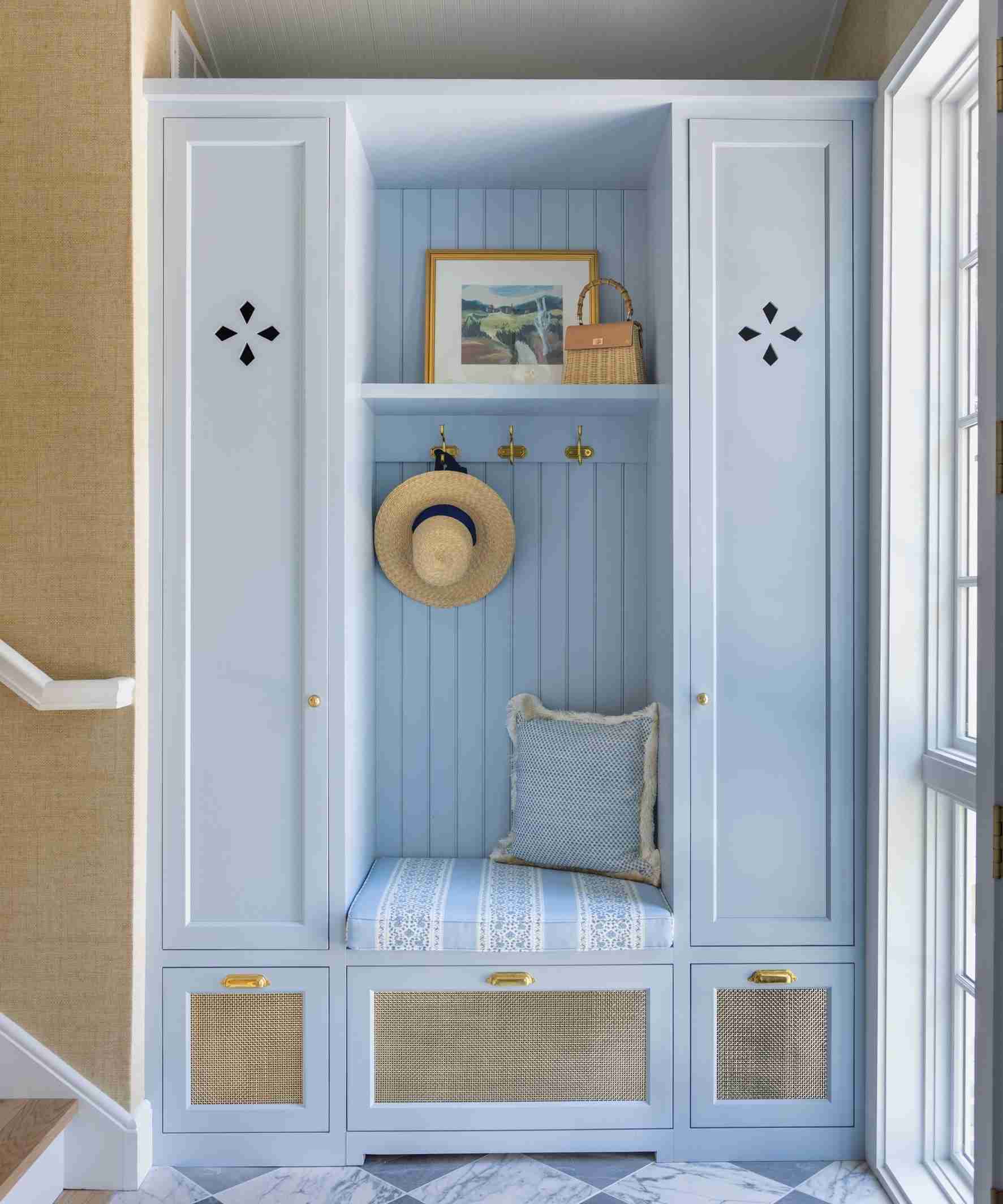
The source’s Copenhagen example uses wall-mounted vertical storage in a narrow entrance. Frequently needed belongings occupy more accessible open positions, while less frequent contents can sit behind closed fronts higher up. This arrangement reduces the number of objects resting on the floor and makes cleaning around the entrance simpler. Check the loaded depth of coats and bags as well as the depth of the cabinet itself.
Resolve support before choosing the decorative details
A bright freestanding cupboard and a wall-mounted system introduce different installation demands. The wall, fixings, hinges, and furniture stability must suit the expected contents; paint and attractive handles cannot compensate for unsuitable support. Keep handles comfortable to use and choose textiles that do not interfere with doors or storage access. The featured yellow cupboard belongs to a specific family entrance, so its exact size is not a prescription for every home. Adapt the relationship between useful capacity, warmth, and surrounding colors while measuring your own route and belongings first.
Give the storage piece a clear visual and practical role
Lonika Chande's yellow cupboard shows how a useful cabinet can become a deliberate feature. Begin with the objects the entrance must contain and the scale that leaves the route comfortable, then consider color and hardware. Painting an oversized cupboard does not resolve its footprint, while a quieter wall-mounted arrangement may suit another home better. Compare the retained door, floor, and neighboring rooms so the selected finish feels connected. The source's examples use different palettes because their settings and intended moods differ. Their shared idea is to treat the entrance as a considered room with ordinary needs, rather than allowing practical furniture to look accidentally accumulated.
Separate frequent access from the contents best kept concealed
Stig Lommer Bagger describes open locations for often-used belongings and closed storage higher up. Translate that into an access hierarchy for the actual household. A daily bag needs a more convenient position than an occasional accessory, and a raised cabinet requires a practical way to reach its contents. Jenn Lake's example also considers seasonal changes and room for guests. A smaller entrance can adopt those priorities without reproducing the same quantity of cabinetry. Check the occupied seat, hanging coats, and footwear together. The visible floor may look calmer below a mounted unit, but people still need room to use that storage without obstructing each other.
Use a few collected details after the system works
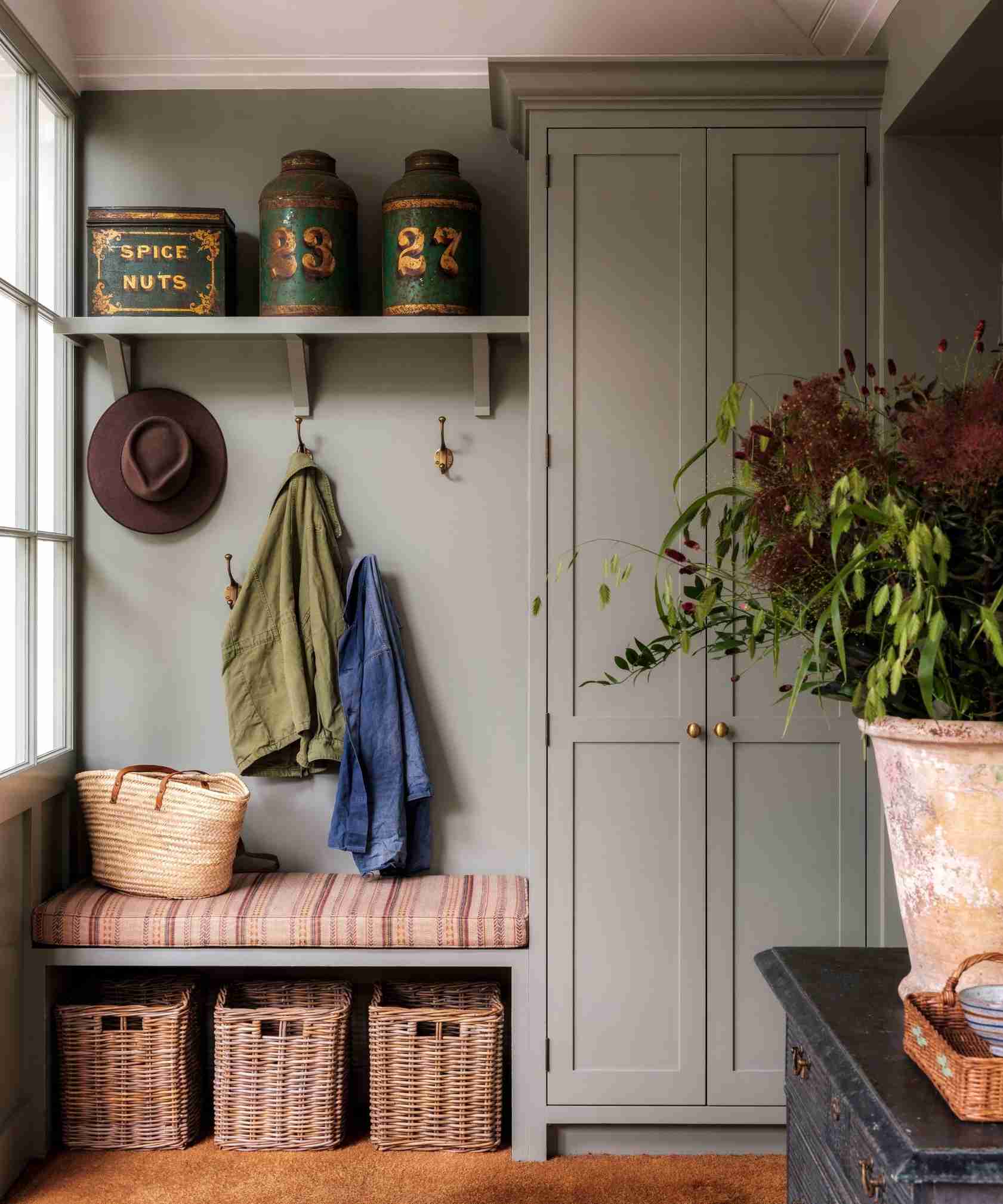
Trevor Fulmer's dedicated shoe cupboard demonstrates the benefit of a clear category, while HAM Interiors adds vintage character around hard-working storage. Compare those two ideas before adding accessories. A shoe-free household may benefit more from an accessible seat and organized footwear than from another decorative tabletop. A lamp, artwork, or antique container can provide personality if it does not obscure the contents needed every day. Keep a deliberate place for keys and wet-weather belongings, and review how the arrangement handles an ordinary arrival. An intentional entrance remains welcoming because the practical routine works, with selected materials and objects reinforcing that order rather than competing with it.
References
- How to Make Your Entryway Storage Look Nicer – 6 Simple Tricks From Designers to Turn Your Hard-Working Pieces Into a Design Moment. Homes and Gardens; Eleanor Richardson.
Entryways need to hold coats, shoes, bags, and umbrellas while still feeling welcoming.


Leave a Comment