
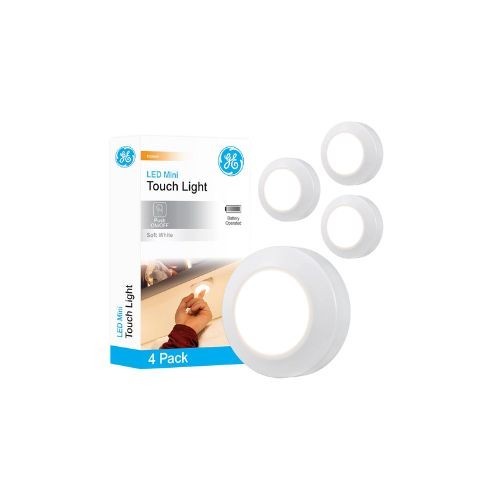
Make Dark Closet Corners Easier to Maintain
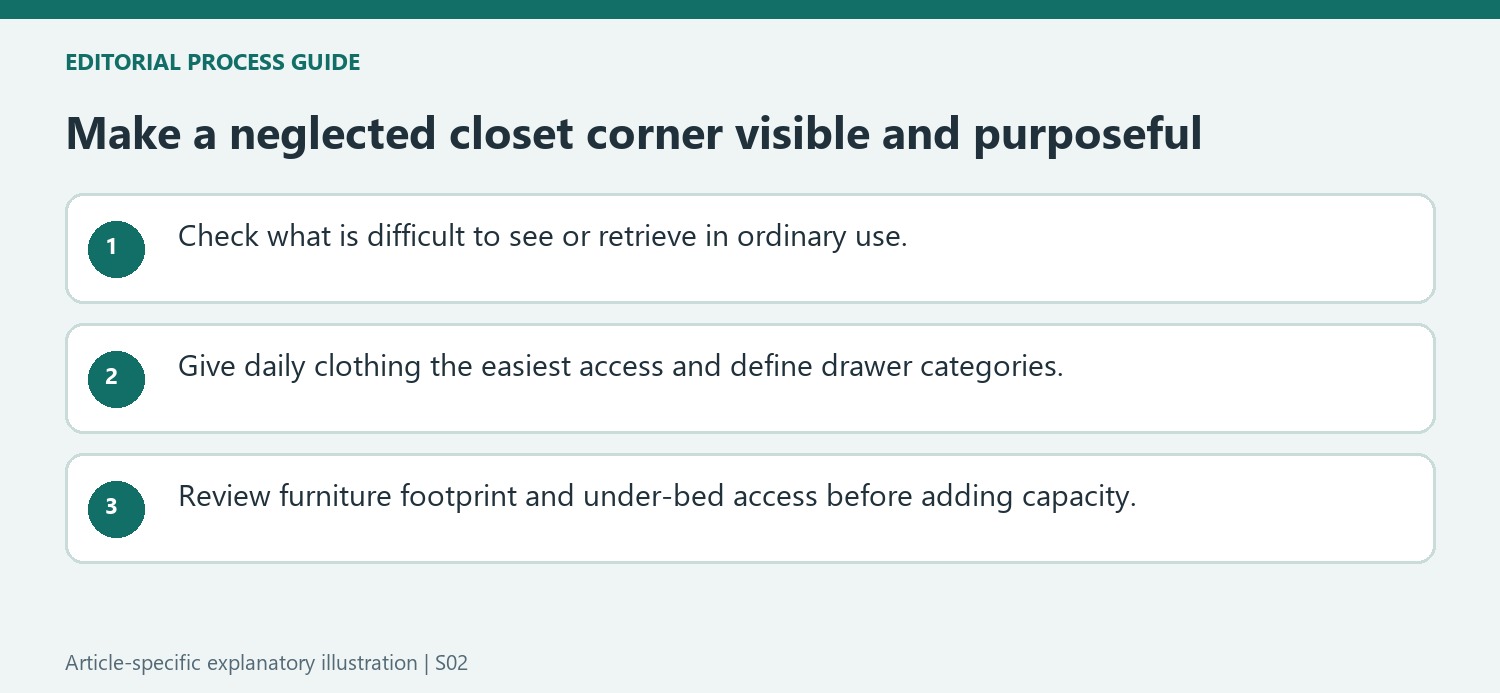
Real Homes' bedroom-storage expert identifies poor lighting as one reason closets become places where belongings are pushed in and forgotten. If the contents are difficult to see, even a carefully arranged collection can become hard to maintain during daily use.
Consider an appropriate light and review which items deserve the easiest access. Check installation requirements and avoid placing lighting where clothing can interfere with it. Better visibility supports organization when it is paired with a realistic amount of belongings and clear categories, rather than used to illuminate an unchanged pile.
Give the easiest positions to everyday clothing
Organizer Jean Prominski points out that sentimental or rarely used possessions can occupy the most useful closet positions. Keep items needed during the ordinary week where they are visible and convenient to retrieve, then find an appropriate less central place for occasional belongings. This is a prioritization exercise, not a reason to discard meaningful possessions simply because they are not worn frequently.
Use the drawers and the bed area deliberately
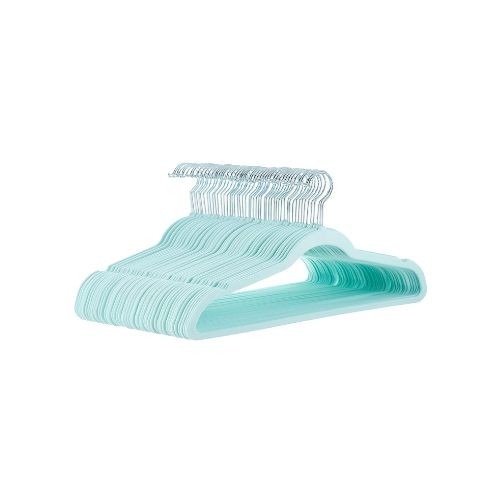
The source recommends dividers and labels where drawers become disordered, and discusses under-bed storage when a small room genuinely needs the capacity. Measure the clearance and choose containers that can be retrieved without unloading the surrounding room. Matching slim hangers may also reduce wasted rail space, provided they support the actual garments appropriately. Adding furniture or accessories can make the bedroom more crowded if the existing contents have not been reviewed. Start with a single dark or overfilled section, improve visibility, and give its contents defined positions. Evaluate whether the change remains easy to maintain after several ordinary mornings rather than judging it only immediately after organizing.
Check whether the hidden area is usable before adding capacity
Jean Prominski links neglected closets with poor visibility and belongings being pushed into an unexamined corner. Open the storage as it is normally used and identify what is difficult to see or reach. A suitable local light may make the contents clearer without adding another shelf. Compare the fitting's intended location, power or charging requirements, and the space around stored textiles. Visibility is only one part of the problem: unrelated papers or unused objects still need decisions about where they belong. An illuminated pile remains a pile. Resolve those categories alongside the light so the closet becomes easier to find things in and simpler to restore afterward.
Allocate the easiest reach to the actual daily wardrobe
The source warns against giving prime positions to possessions that are valued but seldom handled. Distinguish emotional value from access frequency. A treasured garment can remain carefully stored without occupying the location needed every morning for everyday clothing. Compare thin hangers with the actual items they support rather than replacing all hangers only for a uniform look. The garment's shape and care requirements matter as well as rail space. For drawers, define the categories and folding arrangement before choosing dividers. A small labeled section can be more useful than a large drawer filled without boundaries, provided the contents can still be handled comfortably.
Assess storage furniture as part of the whole bedroom
Prominski also cautions against bulky pieces that technically fit but consume the room's useful space. Draw the furniture with drawers open and include the route around the bed. If under-bed storage is needed, assign its contents deliberately and keep frequently used items reachable. The article includes feng shui language, which should be understood as a design perspective rather than evidence that stored belongings create a measurable health effect. The practical questions are access, cleaning, and how much the room must contain. Edit or replace a redundant piece before buying another container to compensate for it. A clear, appropriately sized arrangement can support the daily routine without requiring every available gap to be filled. If one corner repeatedly accumulates unrelated objects, identify where those objects arrive from and give them a more convenient destination rather than expecting a brighter lamp to change the habit.
References
- Small bedroom storage mistakes an organization expert insists you should avoid. Real Homes; Danielle Valente.
Real Homes' bedroom-storage expert identifies poor lighting as one reason closets become places where belongings are pushed in and forgotten.


Leave a Comment