
Use Rolling and Under-Bed Storage in a Dorm
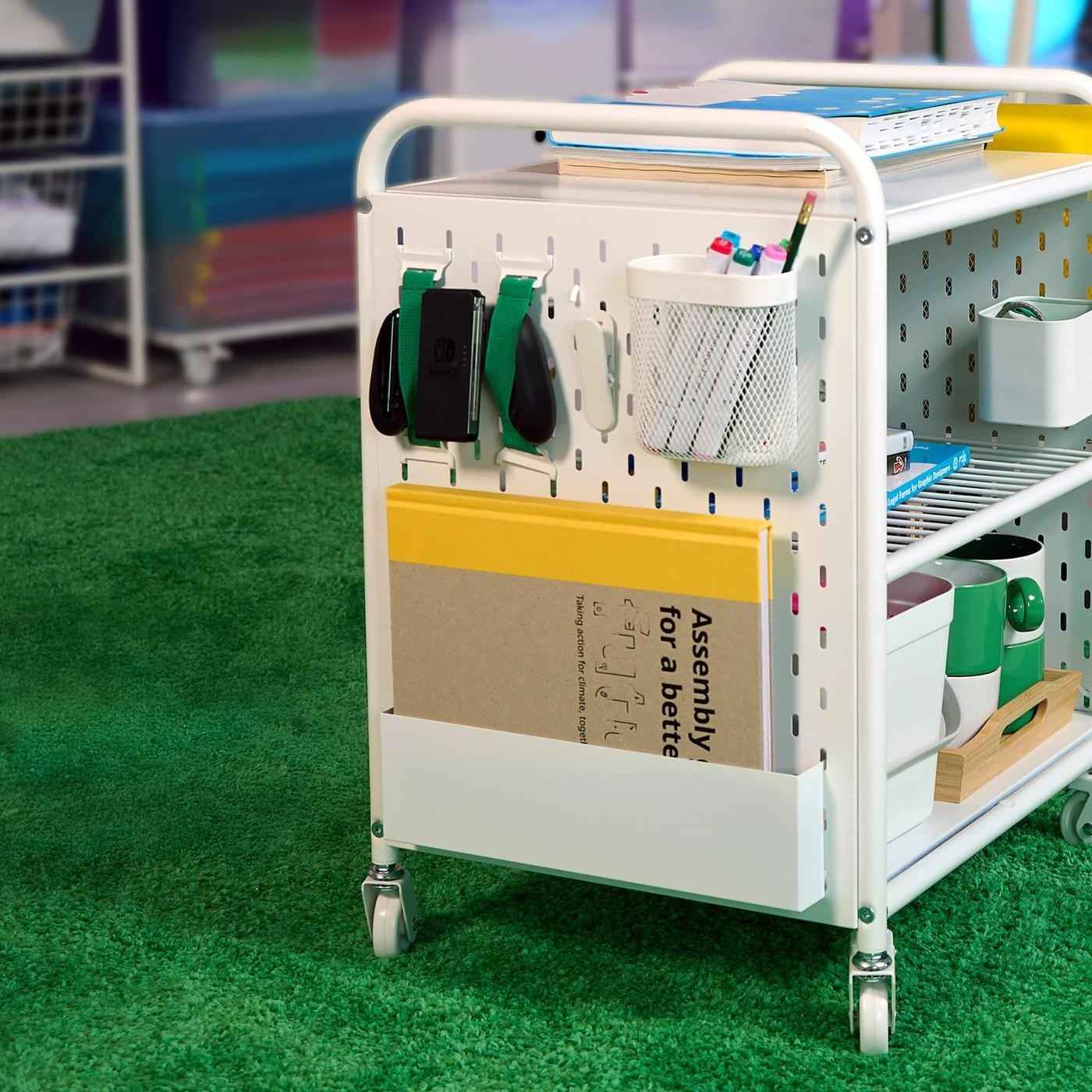
IKEA's college dorm guide treats storage as a way to make a small room support several needs. It describes combining bins with a wheeled utility cart so supplies can be moved into use and returned without occupying the same open floor area all day.
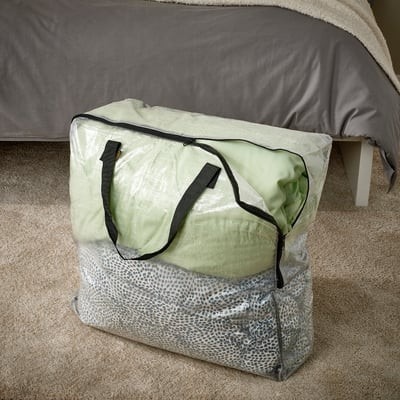
An elevated bed may leave room for the cart underneath, while lower beds can use storage cases sized for clothes or shoes. Measure the actual clearance before selecting containers. Keeping study supplies, snacks, and bedding in assigned places helps the room return to a comfortable resting space after a busy day.
Measure the rolling unit in its stored and working positions
The IKEA example stacks storage bins on a wheeled utility platform so one group of belongings can move together. The source suggests snacks, toiletries, clothing, or linen as possible categories. Choose separate containers appropriate to the actual items rather than mixing food and cleaning products. Measure the full height, including lids and wheels, and check the stated load and stacking guidance for the specific components.
Use the under-bed area only where access remains practical
An elevated bed can provide room for the rolling unit, while a standard frame may need a shallower case. Confirm the clear height and width at the narrowest point, not merely the distance from mattress to floor. A rug edge, bed support, or nearby chair may obstruct the wheels even when the nominal measurements seem sufficient. Follow dorm rules for bed configuration and furniture changes, and do not raise a bed using improvised supports. The source's main design idea is movable, grouped storage that can be put away after use. Its separate interior-design service information is not part of the storage method.
Separate what moves as a group from what stays in place
The source places KUGGIS bins on an INVALLNING wheeled cart as one possible dorm arrangement. Treat it as a starting example and check the current products' fit, loading, and stacking instructions before combining them. List the belongings that are useful together: a study-break group has different contents from toiletries or spare linen. Keeping those categories distinct makes the mobile unit easier to use and avoids searching through several unrelated layers. An illustrative arrangement might keep daily items in the most accessible container and occasional supplies farther down. The point is not to load the cart with every spare belonging, but to move a useful category conveniently and return it to a predictable position.
Measure the full under-bed retrieval route
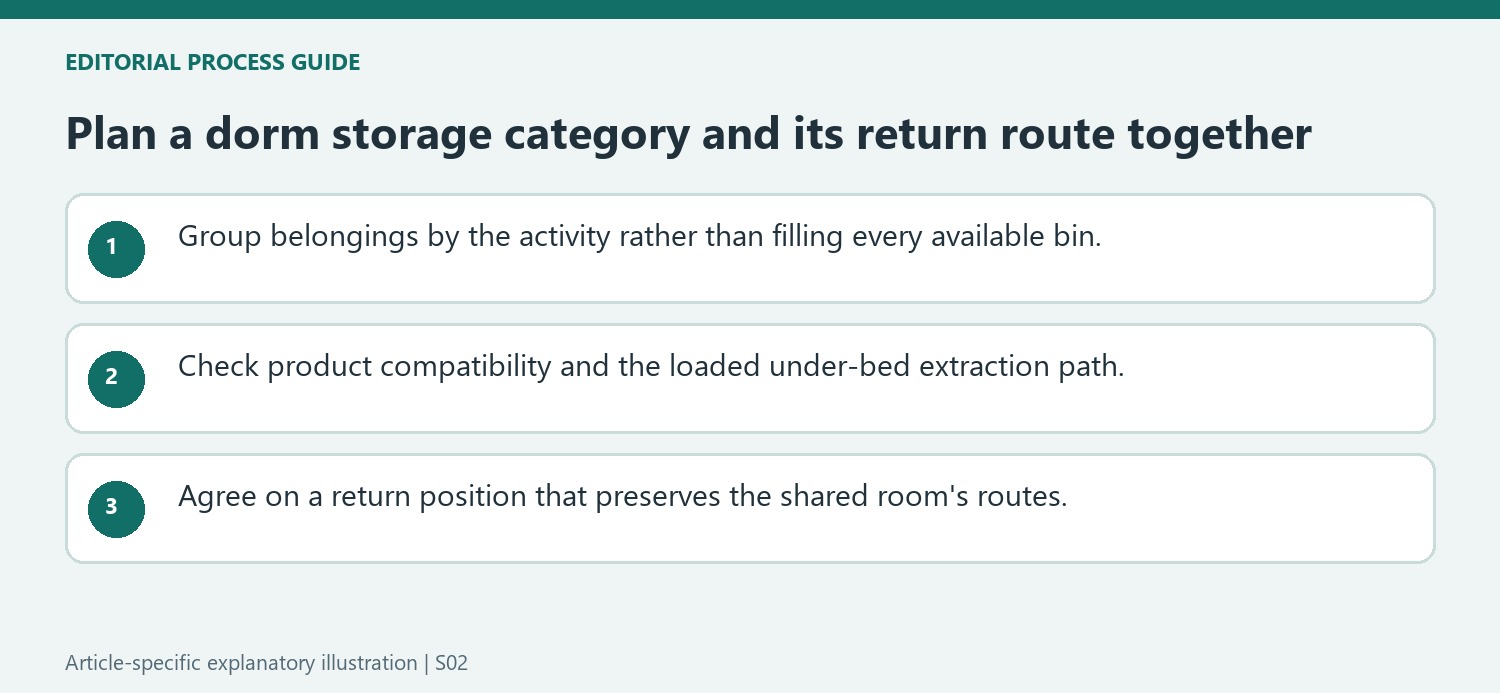
The reference distinguishes an elevated bed that may accommodate the cart from an ordinary bed that requires lower storage cases. Measure the actual clearance, including frame projections, the loaded unit, and the space needed to pull it out. A container that fits below the mattress cannot be considered convenient if another piece of furniture blocks its exit. Do not alter dormitory furniture or raise a bed solely to reproduce a photographed arrangement; check the housing rules and the bed's approved setup. Wheels can make retrieval easier on a suitable floor, but their presence does not remove the need to check handles, turning room, and any threshold along the intended route.
Coordinate a compact system with the roommate and daily routine
A shared dorm needs a clear understanding of whose belongings occupy each location and which routes remain available. Discuss where a cart is returned after use so that a mobile item does not repeatedly end up in someone else's working area. Under-bed storage is more useful when its categories are recognizable and the frequently needed case is easy to retrieve. Compare storage purchases after this plan is clear, and personalize the visible room through a few chosen textiles or objects rather than adding containers for appearance alone. The source also promotes an optional design service; its advertised process and price are separate from the dorm-storage idea and should not be read as a prerequisite for trying a small, practical arrangement.
References
- How to create a fun, organized college dorm. ikea.com.
IKEA's college dorm guide treats storage as a way to make a small room support several needs.


Leave a Comment