

Use Closet Height for Properly Sorted Seasonal Clothing
Empty, clean, and edit first
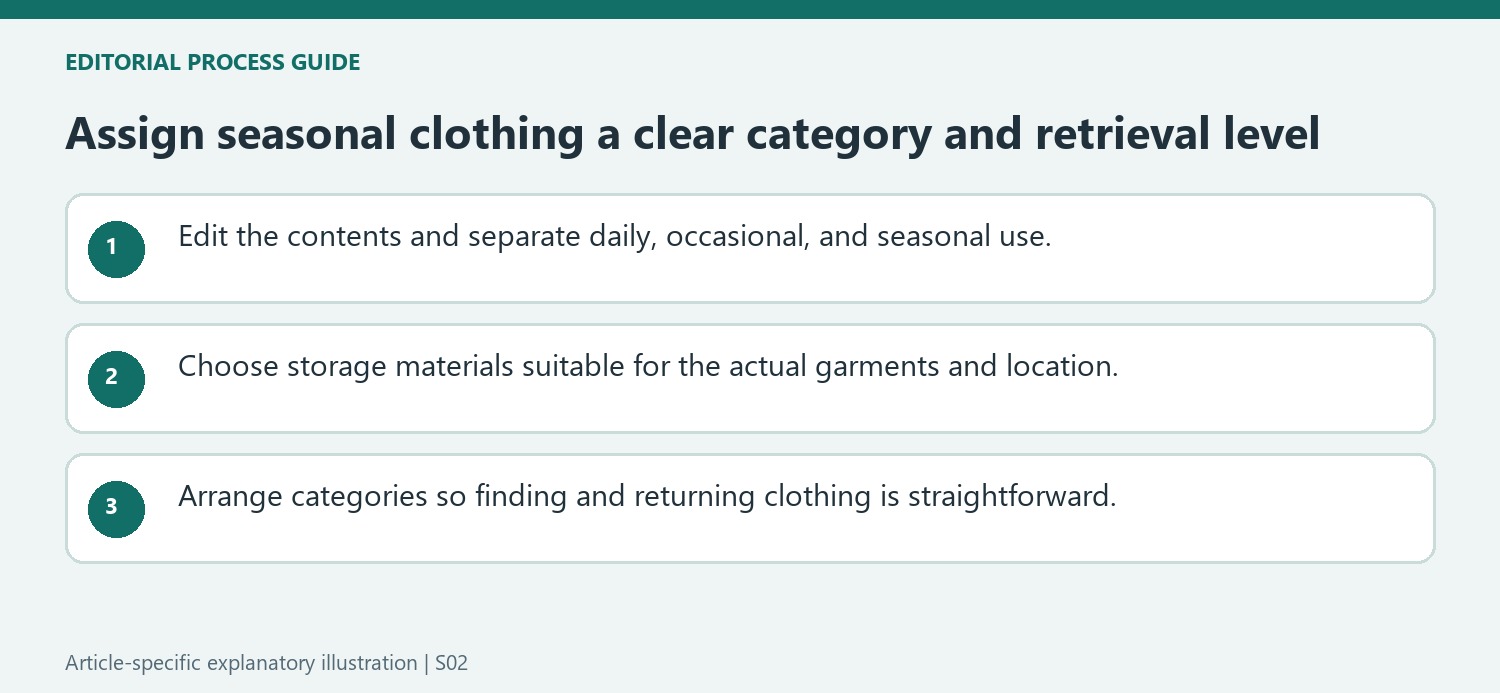
The source begins closet organization by removing the contents so the full collection becomes visible. With shelves and rails clear, clean the interior and vacuum the floor. As clothing returns, remove unwanted pieces and unnecessary duplicates. This sequence separates the decision about what deserves space from the later question of how to arrange it. New containers cannot solve a closet that still holds too much unused clothing.
Separate the seasonal workload
Cold-weather and warm-weather items do not all need equal access throughout the year. The article suggests storing out-of-season clothing separately, using suitable containers on a high shelf or in another storage area when available. Build the system around actual routines rather than a photograph of a perfect wardrobe. The aim is easier mornings and less searching, with the clothes needed now remaining straightforward to find and return.
Sort and clean before assigning shelf space
The source recommends taking clothing out, cleaning the storage using methods suited to its surfaces, and reviewing what should return. That establishes the volume of belongings before containers are selected. Brenda Scott suggests keeping seasonal garments separate and putting occasional items in a less central location where appropriate. Everyday pieces should remain easy to see and retrieve rather than being displaced by a large group of rarely worn clothes.
Choose seasonal storage for the fabric and conditions
The article discusses transparent totes, garment boxes, under-bed cases, and space-saving bags. These have different ventilation, access, and compression characteristics. Do not assume a vacuum bag is appropriate for every structured or delicate garment; follow the textile's care and storage guidance. Clean and fully dry items before putting them away, and identify the contents so the next seasonal change does not require opening every container. Sentimental clothing can have a dedicated location rather than consuming the most accessible rail. The useful system separates categories by use while keeping the amount stored within the actual closet's capacity.
Sort by real use before assigning the upper shelves
The reference begins by removing, cleaning, and editing the closet contents. Complete a manageable review before deciding that more containers are necessary. Identify the garments worn now, occasional pieces worth retaining, and seasonal belongings that can move out of the easiest reach. Brenda Scott notes that a spacious closet may keep both seasons in place, separated on the rail, rather than packing everything away. The useful distinction is access frequency. High storage should not become a destination for a mixed group simply because those objects do not fit anywhere else. Decide the category first, then compare the available shelf dimensions and retrieval arrangement.
Match the storage material to the clothing
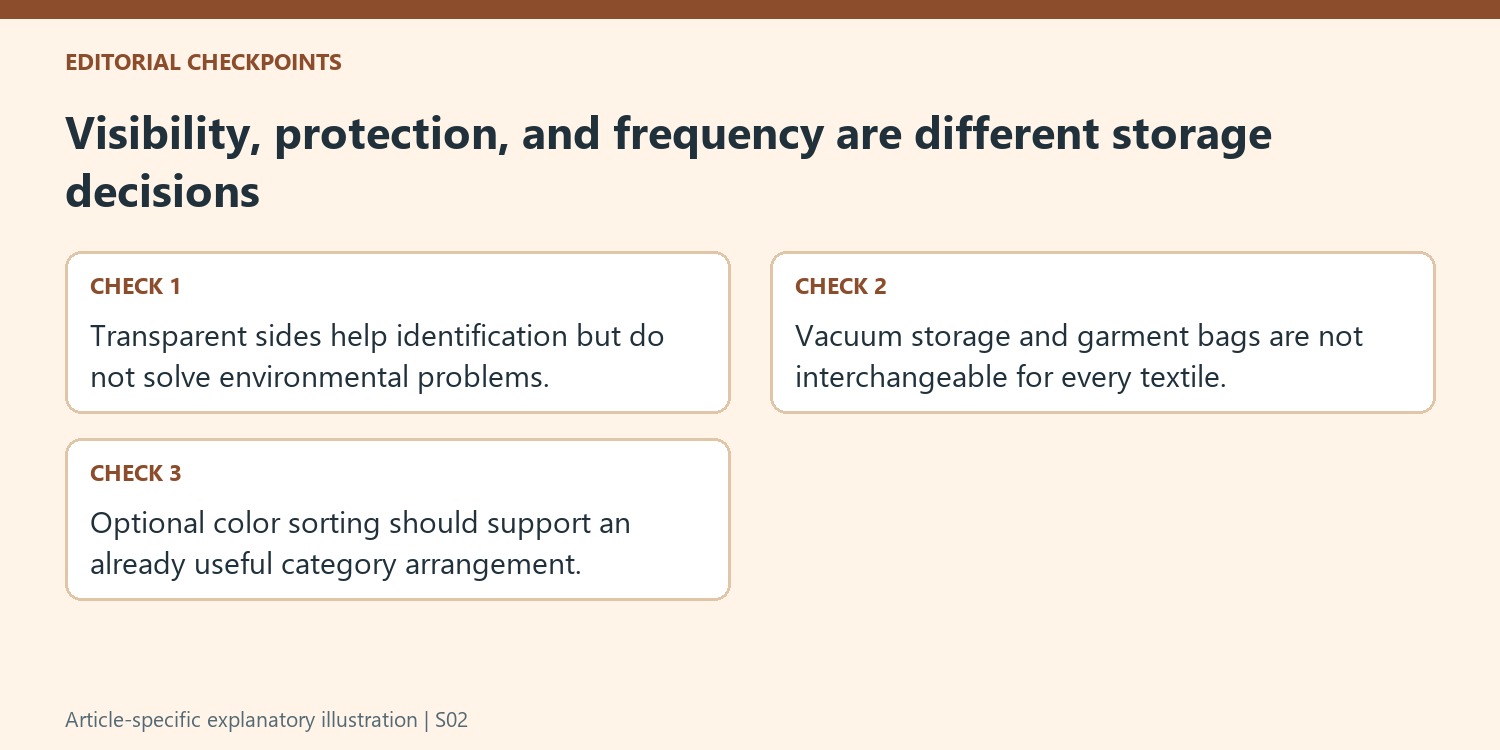
Clear totes, garment bags, vacuum packs, and under-bed cases appear as different options in the source. They do not provide identical protection or suit every textile. Follow the care requirements of the actual garments and the relevant container instructions, particularly for delicate or easily compressed pieces. Clean and dry items appropriately before storage and consider the conditions of the chosen location. A transparent side can aid identification, while a label can make an opaque container understandable. Neither feature resolves moisture or capacity problems on its own. Sentimental clothing also needs a deliberate category and suitable protection rather than being allowed to displace the everyday wardrobe indefinitely.
Use category divisions that simplify the next return
The article suggests grouping shirts, trousers, dresses, and other kinds of clothing, with color sorting as an optional additional layer. Begin with the division that helps the occupant find and return an item most easily. Matching hangers or rail dividers can clarify that arrangement, but are not prerequisites for making it useful. Leave enough room to handle the clothes without disturbing the neighboring category. When the season changes, review what was actually worn before rotating the containers again. A practical closet should make an ordinary morning simpler; its success is the repeatable retrieval and return of belongings, rather than a perfectly graduated photograph that becomes difficult to maintain.
References
- How to organize a closet in 3 simple steps – and 25 easy closet organization ideas to help you maintain order every season. Homes and Gardens; Chiana Dickson.
The source begins closet organization by removing the contents so the full collection becomes visible.


Leave a Comment