
Use Storage to Balance Shared and Private Space
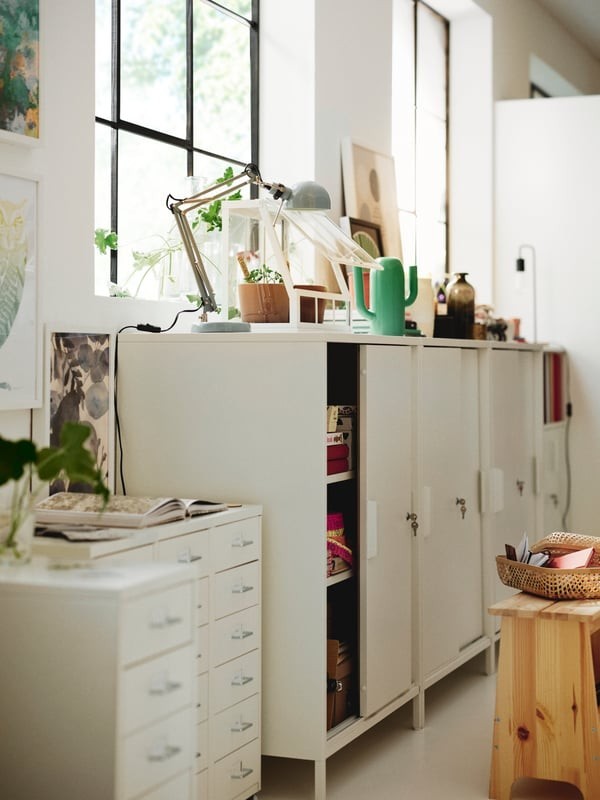
In a shared home, storage can help define where common activities end and personal areas begin. IKEA describes using larger units to divide an open-plan layout, creating zones for different activities while giving the household more organized places for belongings.
Individual storage near shared spaces can also protect a little privacy, such as an allocated cupboard for personal kitchen items. Mobile storage adds another flexible option. Decide which things belong to everyone and which need a separate home before choosing the units, so the arrangement reflects how people actually share the space.
Agree on what is shared before dividing the room
The IKEA example gives housemates individual closed cupboards near a shared kitchen for belongings such as snacks and glassware. Equal personal storage can make ownership clearer without assigning a separate room to every activity. Discuss the categories, available capacity, and return routine first. A label or agreed shelf may be enough when a full cabinet would occupy too much space.
Use a room divider as furniture with two responsibilities
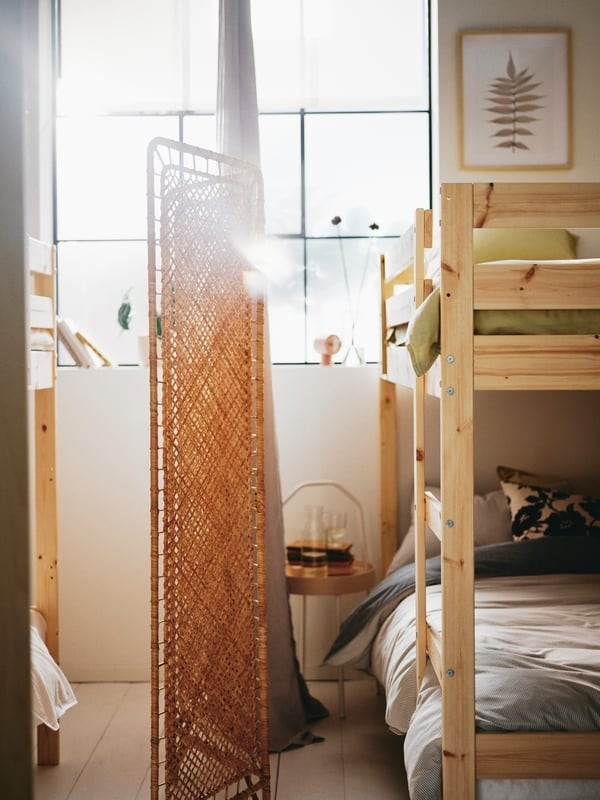
A larger storage unit can create zones while holding belongings, but it also changes sightlines and circulation. Check stability, fixing requirements, and access from either side before using it away from a wall. Keep exits, daylight, and shared routes in mind. A visual boundary does not necessarily provide acoustic privacy, security, or a fully separated room.
Make flexible storage easy to put away
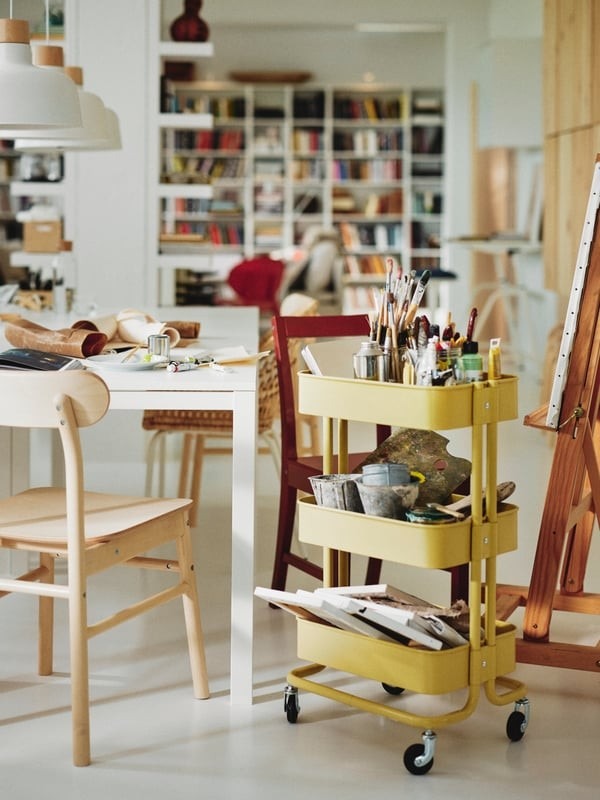
Wheeled storage allows a group of belongings to move with an activity and return afterward. Choose a parking position and check floor transitions, loaded weight, and any locking guidance. Keep personal and communal contents distinct so the mobile unit does not become an unassigned overflow cart. The source’s principle is a shared home with understandable zones and a place for each person’s possessions.
Distinguish personal storage from the privacy of an activity
The IKEA example gives housemates individual closed storage near the kitchen while larger units define activity zones elsewhere. Those two interventions solve different needs. A personal compartment can establish whose glassware or food belongs where without creating a secluded place to work. A divider can interrupt views while leaving the contents on either side shared. Discuss which problem matters in the actual household before choosing furniture. An illustrative plan could mark individual belongings separately from quiet activities, making it easier to see where a cabinet is sufficient and where another visual boundary might be useful. Neither arrangement automatically provides acoustic separation.
Assign shared and individual capacity in an understandable way
The source divides certain closed storage equally among the housemates. Equal allocation can be a clear starting agreement, but the practical arrangement should also consider reach, the types of possessions, and the responsibilities of the people using it. Label or otherwise distinguish the assigned sections in a way the household accepts. Keep shared cooking equipment in a different understandable category so it does not disappear into someone's personal compartment. Review the division when the occupants or their needs change. The aim is a dependable agreement about returning belongings, rather than a cabinet that appears tidy while its ownership and access rules remain ambiguous.
Check both sides before using storage as a divider
A large unit in an open-plan room affects views, light, routes, and retrieval as well as storage capacity. Confirm that the particular product is suitable for the intended position and follow its support and securing requirements. A freestanding appearance in a photograph is not an installation specification. Compare what each side sees and how the neighboring seats or work surfaces are used. Mobile pieces also need a defined return position so flexibility does not repeatedly displace someone else's activity. The reference describes a large shared household, so a smaller home may need only one selective boundary. Preserve enough connection for shared living while giving the occupants a clear way to manage the moments and belongings they want to keep personal. Discuss the arrangement before purchasing another large unit.
References
In a shared home, storage can help define where common activities end and personal areas begin.


Leave a Comment