
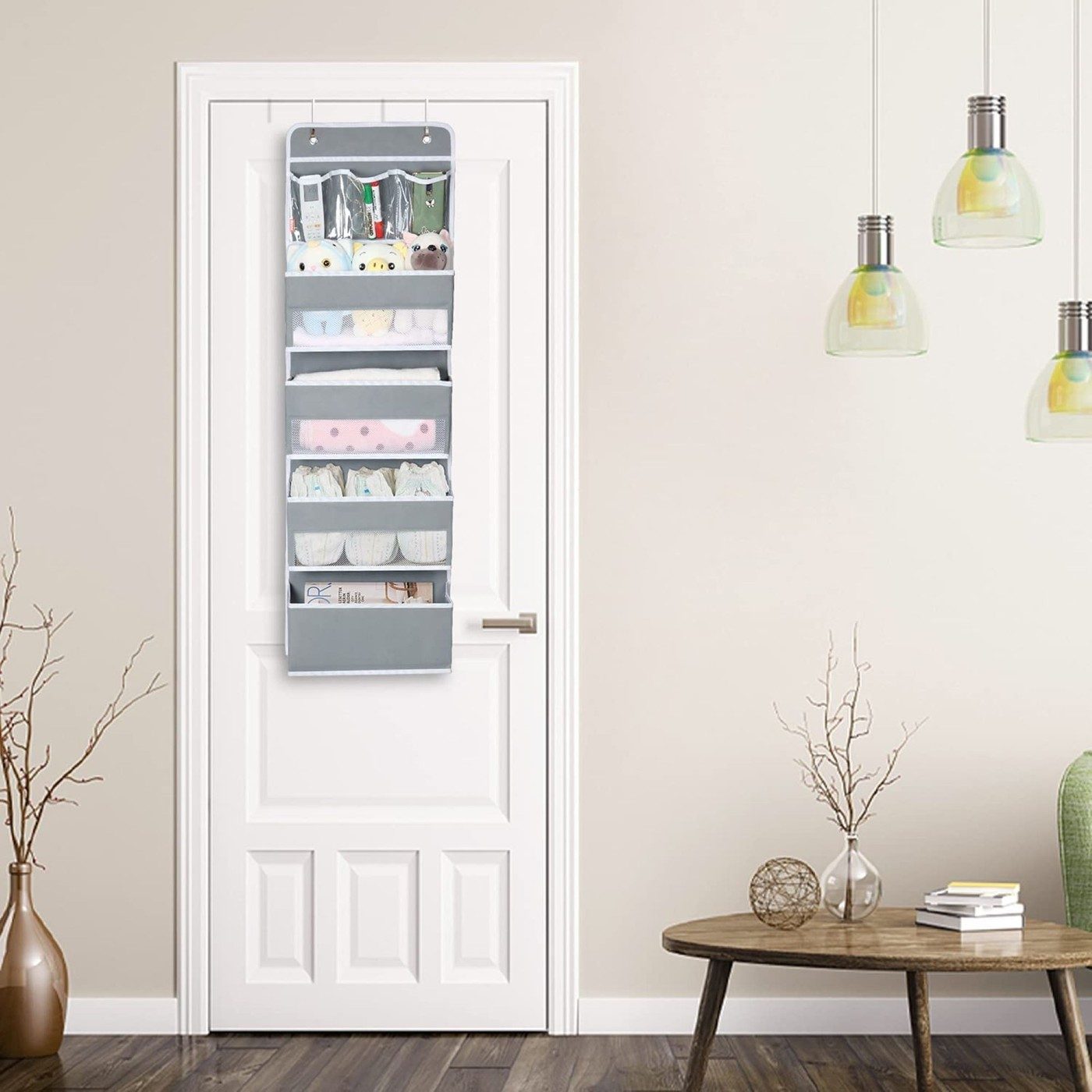
Use a Tiny Closet Door for Smaller Accessories
A small closet needs an inventory before it needs more organizers. Real Homes' expert guidance starts with removing unwanted clothing and damaged shoes, then considers ways to use the remaining space more effectively for the collection being kept.
An over-the-door organizer can hold scarves, belts, socks, or small bags, leaving other compartments for larger garments. Check door clearance and the organizer's support requirements before installing it. This works best when the contents are grouped clearly, so the extra pockets remain useful rather than becoming another place for miscellaneous items.
Compare the door organizer with the closed position
Hailey Becnel suggests using the back of a small closet door for lightweight accessories that would otherwise occupy drawers or rail space. Check the organizer’s pocket sizes and mounting instructions, and test the door with the intended contents in place. A pocket full of shoes or small bags projects farther than an empty fabric panel. Keep hinges, the handle, and the closing gap free.
Add drawers or rails only where the measurements allow
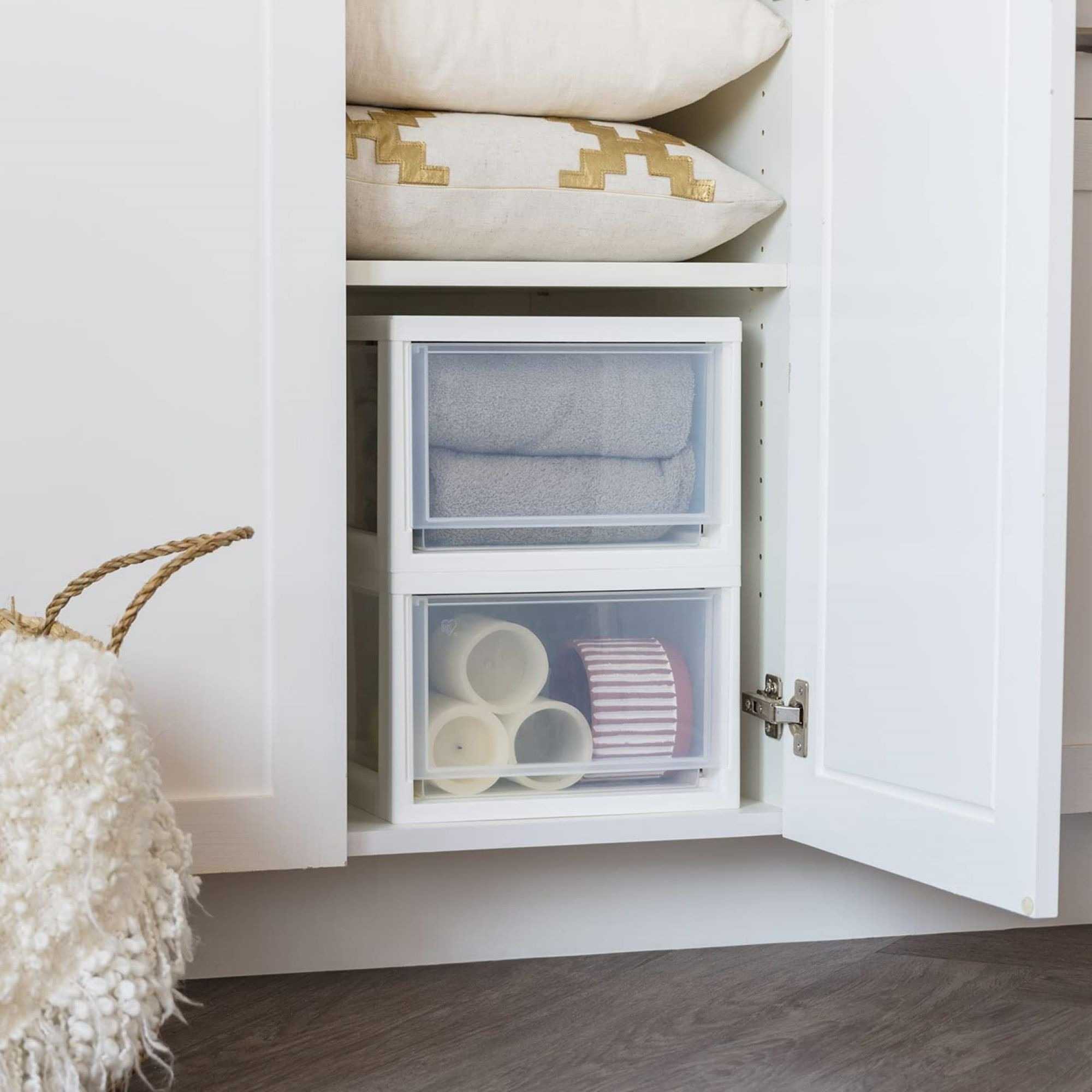
The source describes a small secondhand dresser inside a closet and suggests stackable drawers where suitable height is available. Confirm that drawers can open fully and that a stacked system follows the maker’s stability guidance. A second clothes rail works only if the garments above and below both have sufficient hanging length. Multi-tier hangers also need appropriate support and retrieval room. The article recommends vacuum bags for seasonal textiles, but compression is not suitable for every material or structured garment. Follow care requirements and reserve accessible storage for frequently worn clothing rather than treating every extra organizer as permission to keep adding more.
Decide which small items deserve the door position
Hailey Becnel recommends over-door organizers for scarves, belts, socks, and smaller accessories. Compare those categories with the actual pockets and the way the door is used. A long scarf needs a different space from a small pouch, and jewelry may require protection from tangling rather than simply another opening. Give the most frequently used category a reachable position. Check that the loaded organizer allows the door to close and swing normally without rubbing on the contents behind it. An illustrative first pass could assign only everyday accessories and leave occasional pieces elsewhere. The door gains a clear storage role without becoming a mixed collection of everything that cannot fit on the rail.
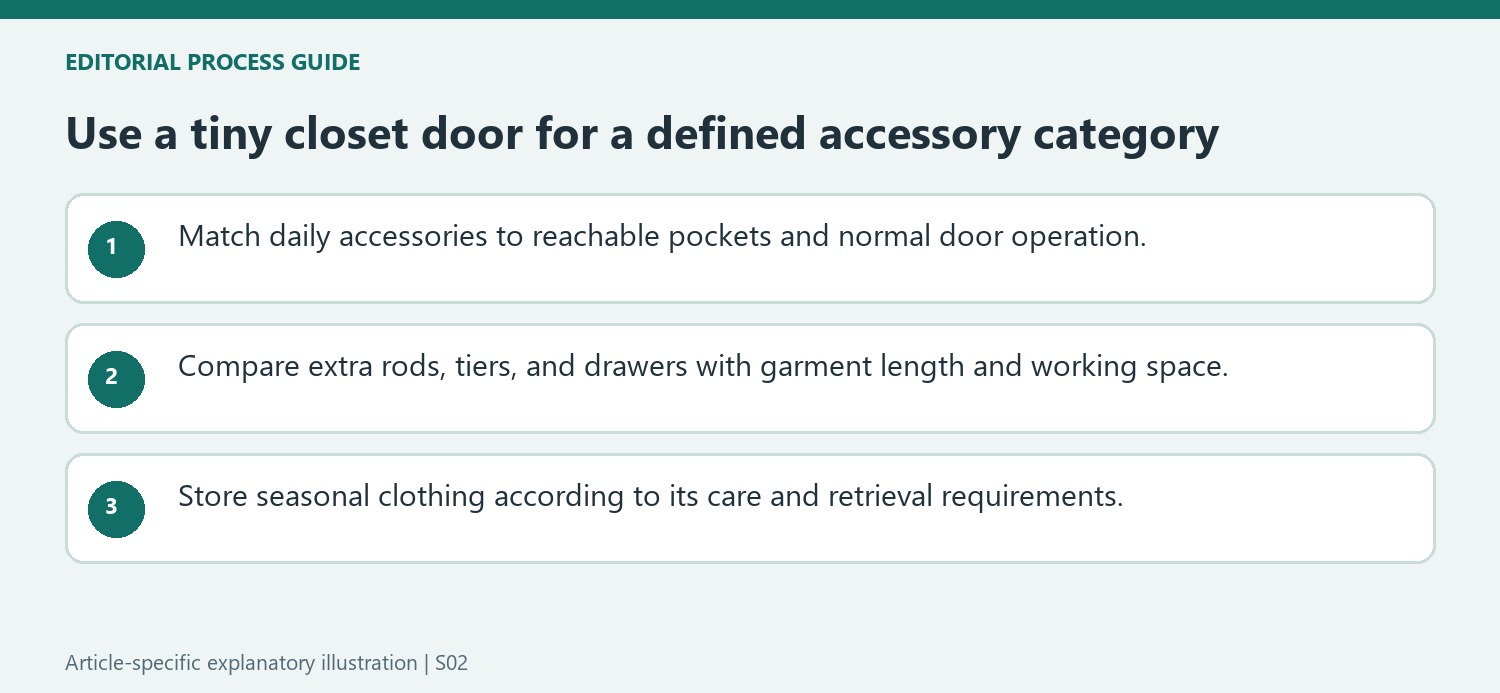
Compare vertical organizers with the clothes they must support
The source proposes multi-tier hangers, an additional rod, and stacked drawers as ways to use height. Each changes a different part of the closet. Multiple hanging levels require suitable garment lengths and enough reach, while a second rod needs support appropriate to its intended load. A mini dresser can use lower space but may obstruct longer clothes or require more drawer-opening room than expected. Measure the occupied arrangement before buying any of these additions. More theoretical positions are not useful if removing one garment means dismantling several others. The aim is to make the retained wardrobe easier to handle, rather than maximize an advertised count of hangers.
Treat seasonal storage as a clothing-care decision
Vacuum bags in the shopping selection are one way to reduce the visible volume of occasional belongings, but they are not suitable for every textile or filling. Follow the actual garments' care guidance and the container instructions instead of compressing the whole off-season wardrobe by default. Identify each stored category and keep a realistic retrieval route if the weather changes. Editing still comes before container selection: repairable, donatable, and worn-out clothing need different next steps. The source's suggested time-based review is a prompt for reflection, not a requirement to discard every rarely worn occasion piece. Keep what has a deliberate role and give it an appropriate location, leaving the daily closet simple to use. Review the arrangement with the most awkward retained garment as well as a compact folded item; that comparison can expose a height or depth problem hidden by an empty organizer.
References
- How to organize your impossibly tiny apartment closet. Real Homes; Aida M Toro.
A small closet needs an inventory before it needs more organizers.


Leave a Comment