
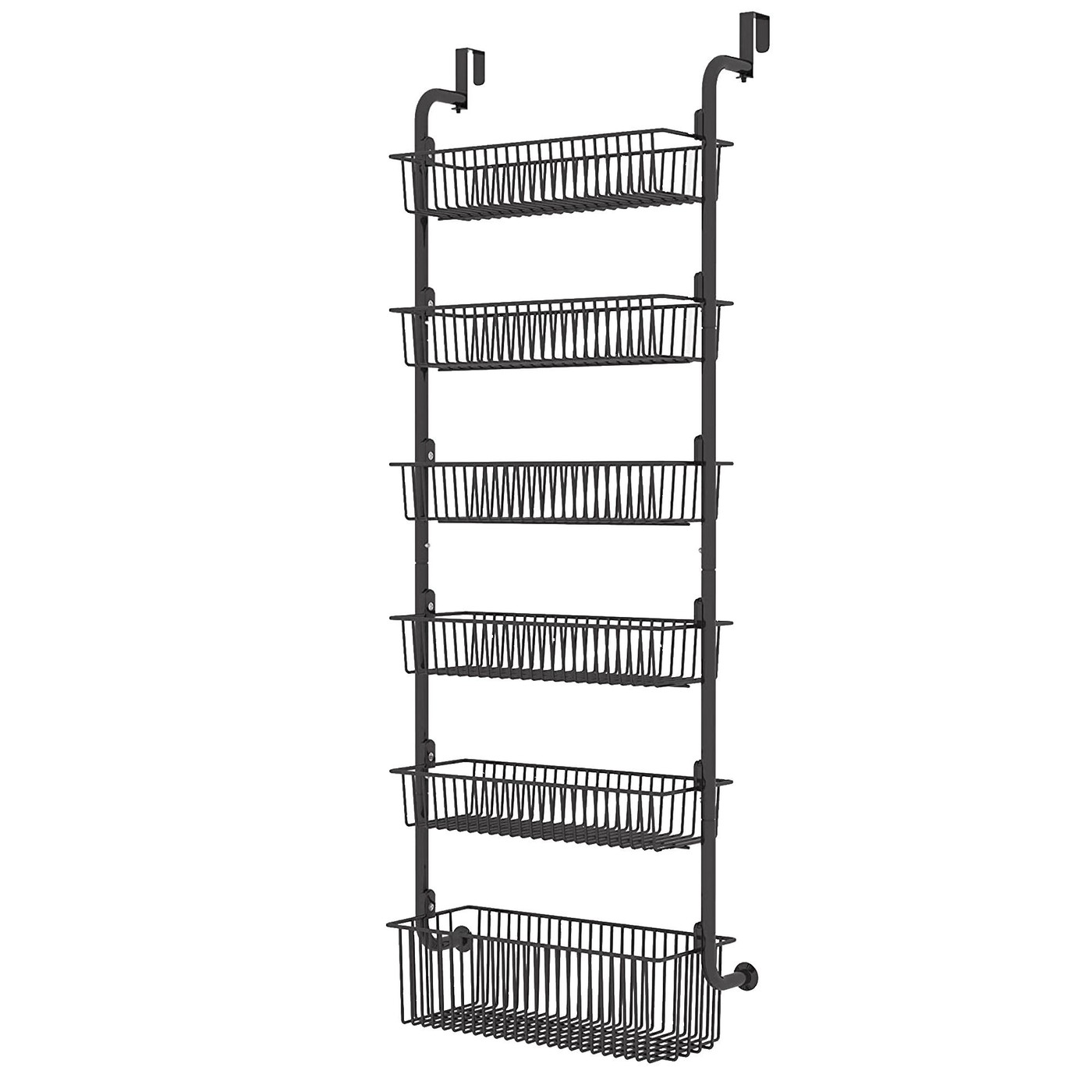
Review Doors and Closet Height for Extra Storage
Real Homes' small-space guidance points to overlooked areas such as the inside of a closet door and unused wall height. An over-the-door shoe bag can hold footwear, winter accessories, or grab-and-go items, while suitable hooks can keep frequently used belongings accessible.
Modular stackable storage may help where a closet has spare height. Measure the gaps and check support and surface requirements before adding accessories. Use the new space for clear categories so the solution improves retrieval rather than simply making it possible to pack the closet more densely.
Contain open shelves without hiding their purpose
Jamie Hord recommends using vertical space and adding baskets when an exposed shelf feels visually busy. Assign each basket a clear category such as journals or washcloths and keep the daily contents within comfortable reach. The shelf and fixings still need to support the loaded containers. A shelf riser inside an existing cabinet may solve a small height gap without requiring a new wall installation.
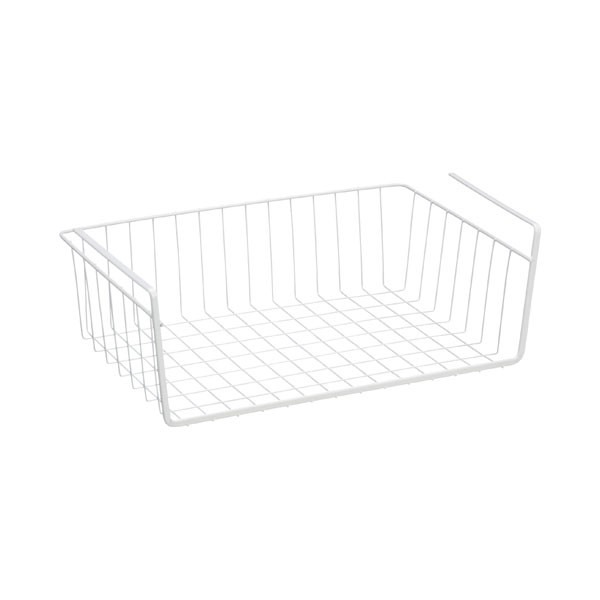
Compare drawer divisions with the actual objects
The source extends drawer organization beyond clothing to kitchen utensils and other household belongings. A divider is helpful when its dimensions make the contents easier to separate and retrieve. Measure the drawer interior and allow room for handles and runners before buying a large modular set. Start with the smallest arrangement that resolves the problem.
Keep hidden storage cleanable and identifiable
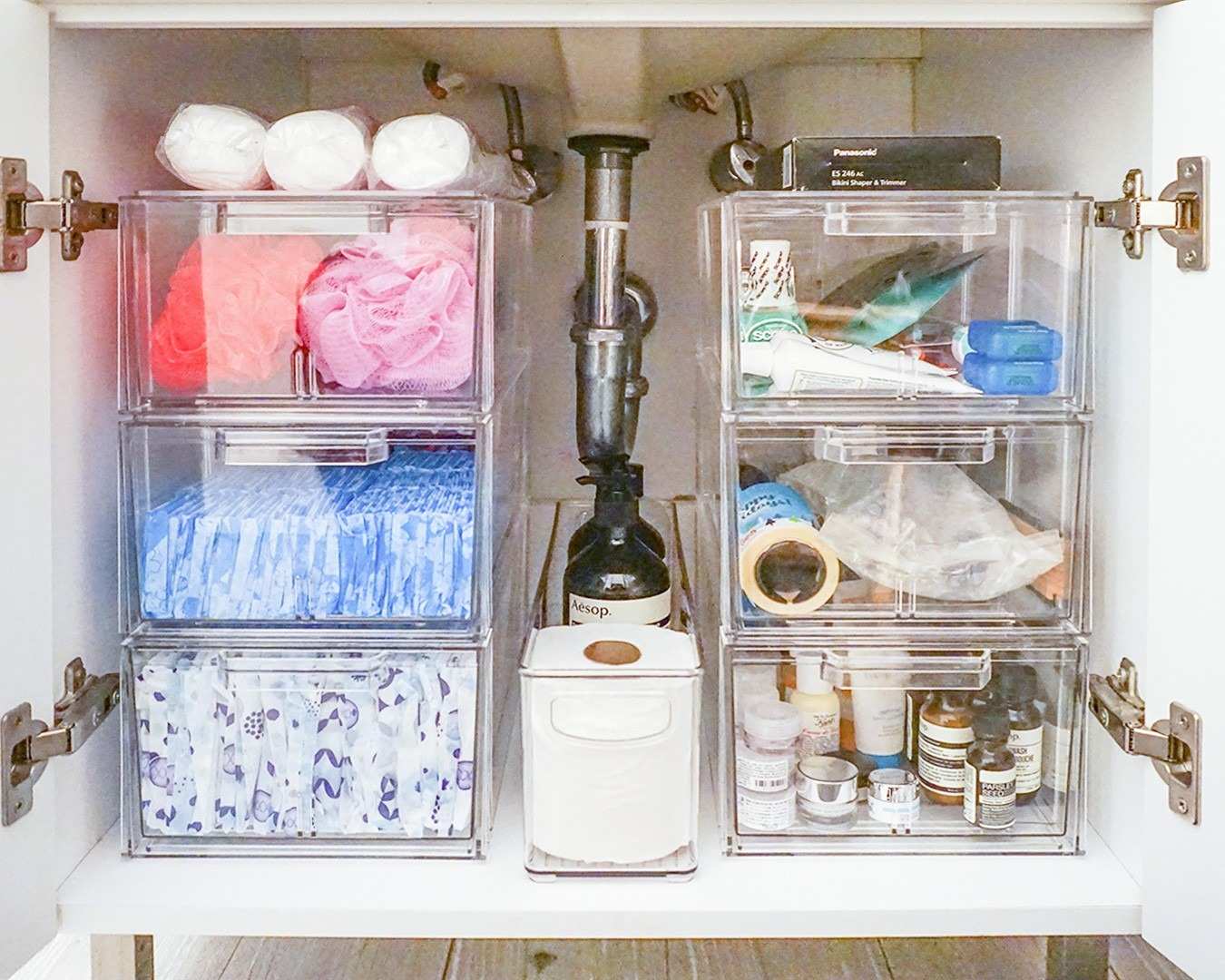
Hord prefers leaving under-bed space clear where possible, while acknowledging that small homes may need it. If it is used, choose suitable covered containers and label them. Avoid forcing storage into damp under-sink areas or obstructing plumbing access. Door bags, shelves, and under-bed boxes work best as assigned locations, not as disconnected places to hide a growing collection.
Give each overlooked location a specific category
Jamie Hord recommends reviewing closet doors, wall height, and shelves instead of assuming extra capacity must come from another cabinet. Begin with the belongings that lack a location, then compare the suitable gaps. A door organizer may suit grab-and-go accessories, while an upper cubby may hold a less frequently used category. The support, dimensions, and retrieval method remain part of the decision. An unused patch is not automatically a suitable storage location simply because a container fits. Map how the item is taken out and returned, including the door or neighboring furniture that moves at the same time. That sequence reveals whether the new destination will actually be used.
Separate visual containment from genuine extra capacity
Baskets can make open shelves look quieter, and drawer dividers can clarify categories, but neither creates unlimited volume. Review the retained contents before measuring a set of organizers. A shelf insert may use spare height for dishes, provided it suits the shelf, the objects, and the intended load. An existing dresser may serve another activity only where its construction, height, and storage arrangement are appropriate. Do not infer television support or equipment ventilation from the broad idea of using furniture twice. Compare the exact use with current specifications. The useful result is a smaller number of clearly assigned storage groups rather than a new layer of containers filling every visible surface.
Choose unusual locations with their environment in mind
The source mentions sink cabinets, windowsills, and under-bed storage as possible locations. These have different exposure and access conditions. Plumbing needs to remain reachable, a windowsill must preserve the required window operation, and under-bed containers need practical extraction and cleaning space. Hord favors keeping the area beneath a bed as clear as possible, while recognizing that some homes need it for storage. Treat that as a conditional choice rather than an absolute ban or a requirement to use risers. Any change to bed height must suit the actual frame and its approved use. A selective combination of good locations can solve the capacity problem without turning the entire apartment into inaccessible storage. A clear destination beside the relevant activity can be more useful than a larger container several retrieval steps away.
References
- 6 small space storage ideas so you can fit all your li'l things in your home. Real Homes; Aida M Toro.
Real Homes' small-space guidance points to overlooked areas such as the inside of a closet door and unused wall height.


Leave a Comment