
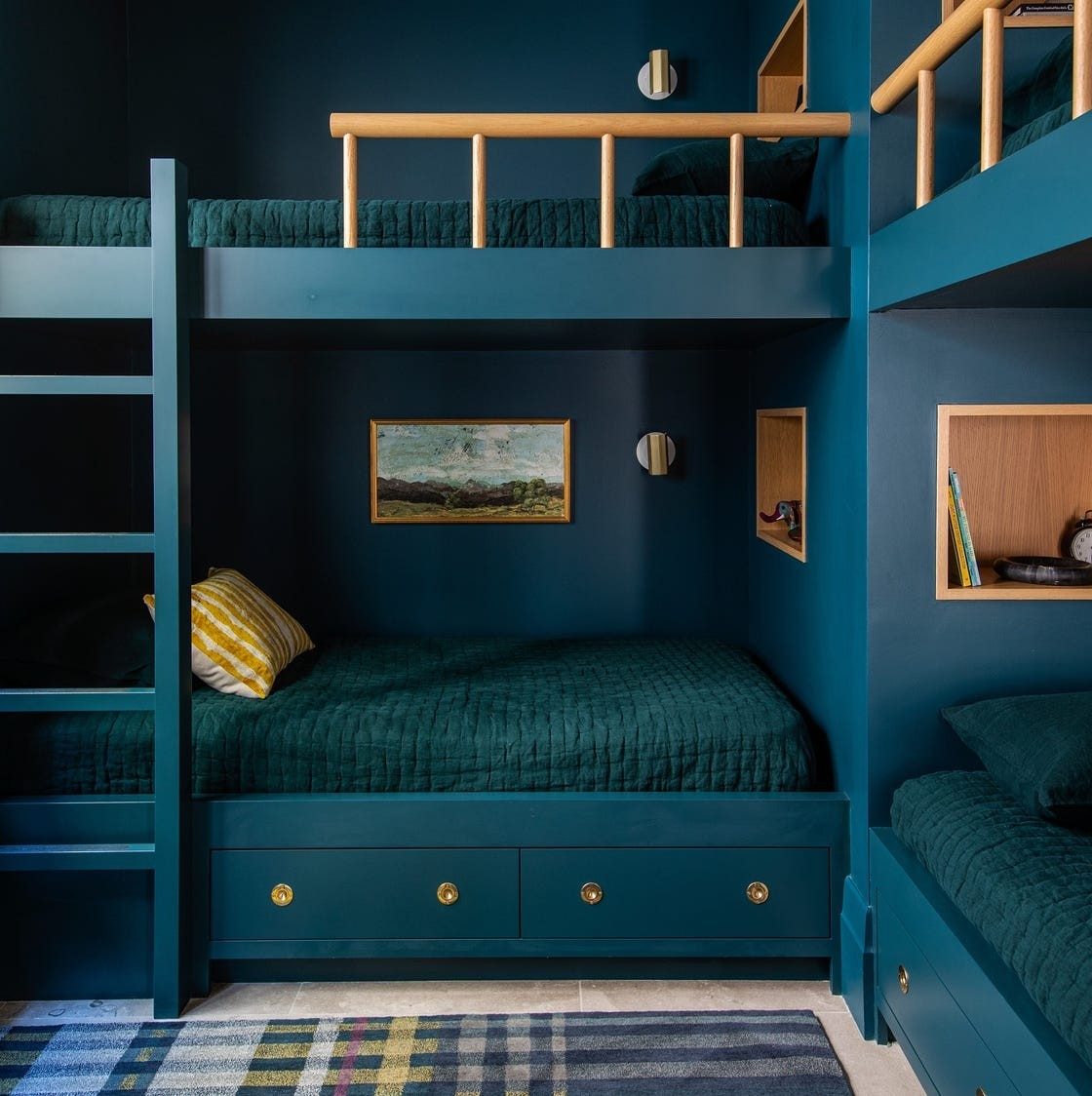
Find Bedroom Storage Within Existing Furniture Positions
House Beautiful's bedroom examples add shelving behind a headboard, drawers below a daybed and bins beneath a bed. In a shared children's room, one wide dresser replaces two nightstands while supplying additional clothing storage. These arrangements make existing furniture positions work harder.
Keep children's storage within reach when independent access is appropriate. The examples show that the best location depends on who uses the belongings, not simply on where another cabinet will fit.
Match the example to the user and the retrieval motion
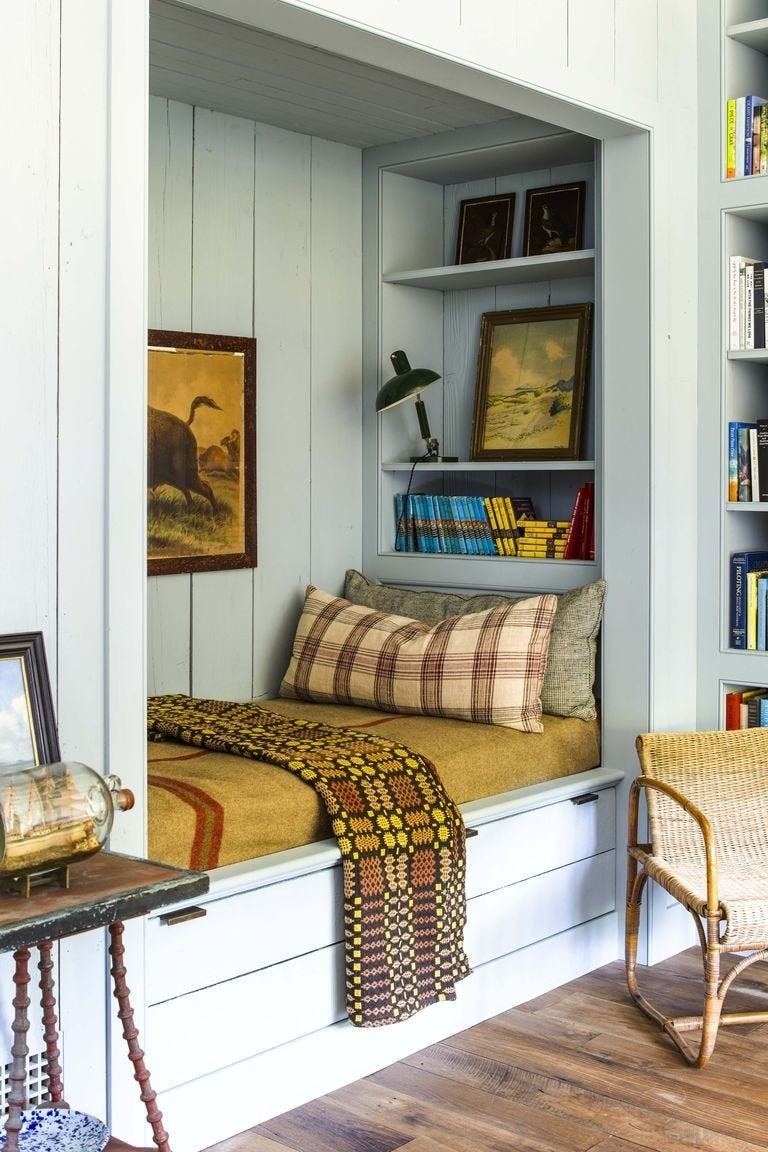
Summer Thornton’s headboard shelving displays bags and accessories, while a daybed by Rita Konig and Gil Schafer conceals drawers beneath the seat. These approaches suit different contents and different access patterns. A display niche needs a safe position and enough depth; a drawer needs an unobstructed opening route. Compare those conditions with the bedroom before choosing a similar-looking piece.
Combine furniture functions with suitable construction
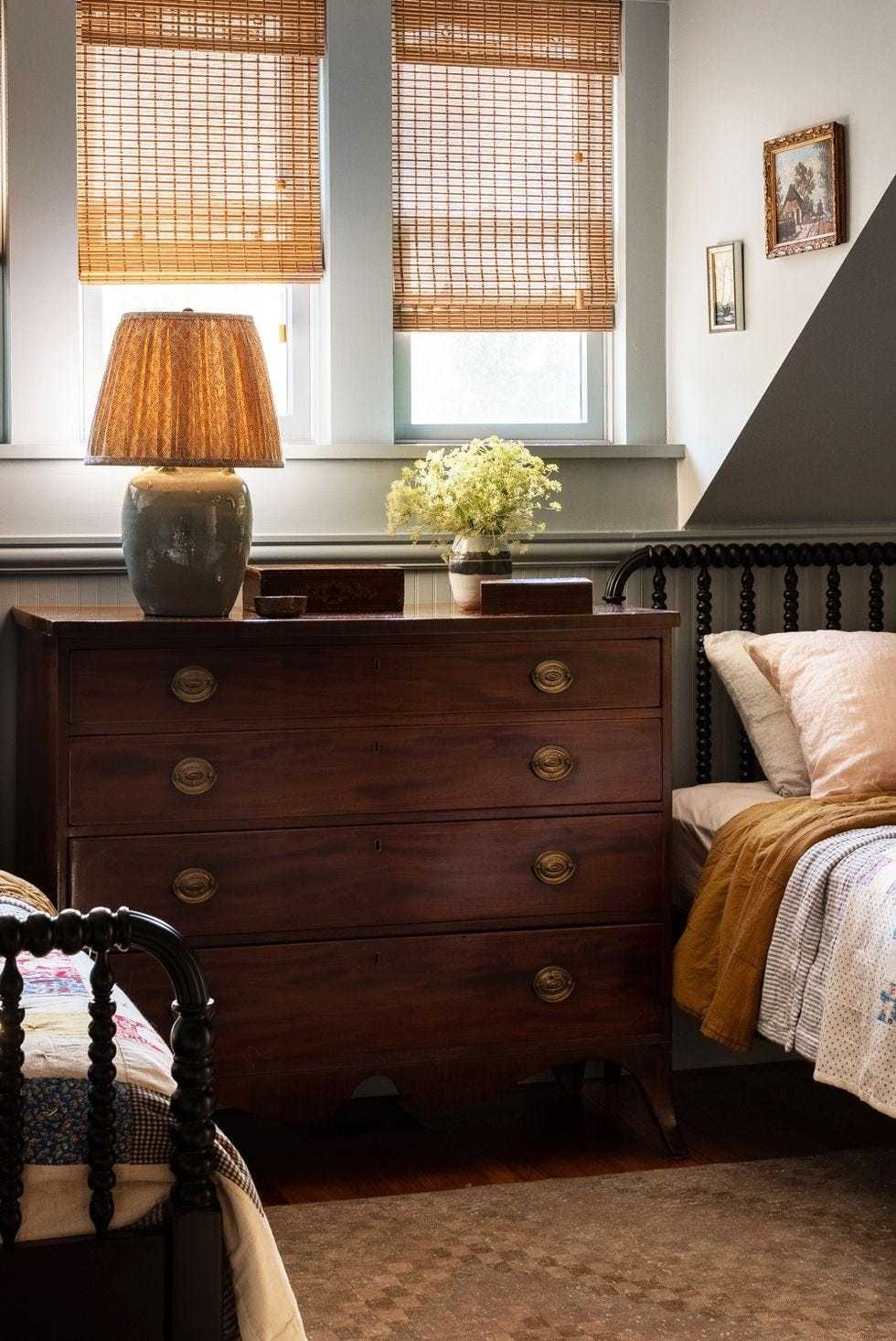
The source shows a wide dresser between children’s beds in a Heidi Caillier design and easy-to-grip lower drawers in a Regan Baker room. These are examples of reducing duplicate furniture while making useful contents accessible. Confirm stability and anchoring requirements, and choose heights appropriate to the actual users. A trunk at the foot of a bed may add storage, but it should serve as a seat only when designed for that purpose.
Adapt built-ins rather than assuming every wall can be cut
The article also includes cabinets beneath angled ceilings and custom armoires beside a bed. These projects depend on the building and joinery design. Investigate structure, services, and permissions before treating an apparent recess as usable storage. Simpler nightstand drawers or measured under-bed cases may meet the same immediate need.
Start with furniture positions that already work
The House Beautiful collection shows storage being incorporated into places already occupied by beds, daybeds, and bedside furniture. A dresser between two children's beds is one example; drawers beneath a daybed are another. Compare these relationships with the actual bedroom before choosing a new piece. The existing route, sleeping position, and access to a drawer matter more than the appearance of an empty compartment. A shared dresser also needs a clear division of belongings that both users understand. It can reduce the number of separate pieces without reducing personal storage to an undifferentiated pile. Test the occupied drawer and the space needed to stand in front of it.
Match the retrieval effort to the contents
Under-bed seasonal bins, large nightstand drawers, and a trunk at the foot of a bed serve different access patterns in the source examples. A bedside drawer may suit items handled each evening, while occasional bedding may tolerate a less immediate position. Compare how the lid or drawer opens with the neighboring furniture and where its user stands. A trunk that doubles as a useful surface still has to be cleared if its lid is the only access. Reachable children's drawers work best when the child can identify and return the contents. Choose the category first so that the most convenient positions are not filled by items that rarely leave storage.
Separate tailored architecture from transferable principles
Shelves behind a headboard, staircase drawers, and shallow cabinets following an irregular ceiling show how custom work can respond to an awkward room. These photographs are design examples, rather than complete plans for modifying stairs or attaching cabinetry. A fitted intervention needs its own assessment of construction, support, services, and access. The transferable lesson is to measure the shape actually available and consider how stored objects will leave it. A narrow cabinet might suit a small category better than a deeper wardrobe placed where it blocks the room. Keep the existing furniture arrangement only where it still supports comfortable daily use. If the new storage makes the bed harder to approach or hides the items most often needed, revise its position before investing in fabrication. A clear drawing with doors and drawers open can expose that conflict early.
References
- 25 Designer-Approved Storage Ideas That Won't Ruin Your Bedroom's Aesthetic. House Beautiful; Kate McGregor.
House Beautiful's bedroom examples add shelving behind a headboard, drawers below a daybed and bins beneath a bed.


Leave a Comment