
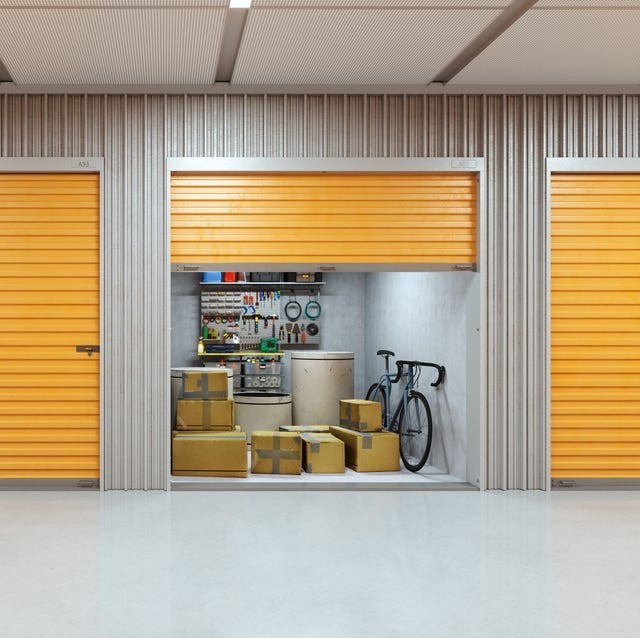
Treat a Storage Unit as a Planned Temporary Resource
House Beautiful's interview with organizer Jennings King describes storage units as useful during moves, renovations or extended travel. Large inherited furniture and seasonal decorations can suit temporary off-site storage when they do not fit the current home. Plastic bins offer more protection than cardboard.
Consider the intended duration before committing, since forgotten belongings can turn a temporary solution into an ongoing expense. Choose the unit size around the actual contents rather than renting space without reviewing what will go there.
Review the contents before comparing rental sizes
Jennings King recommends editing the belongings first so the rented capacity reflects what is genuinely worth keeping. Measure larger furniture and prepare an inventory with photographs. Plan a clear route to boxes that will be needed again, rather than filling every inch from the door inward. Shelving and labels can help when they are suitable for the loaded contents.
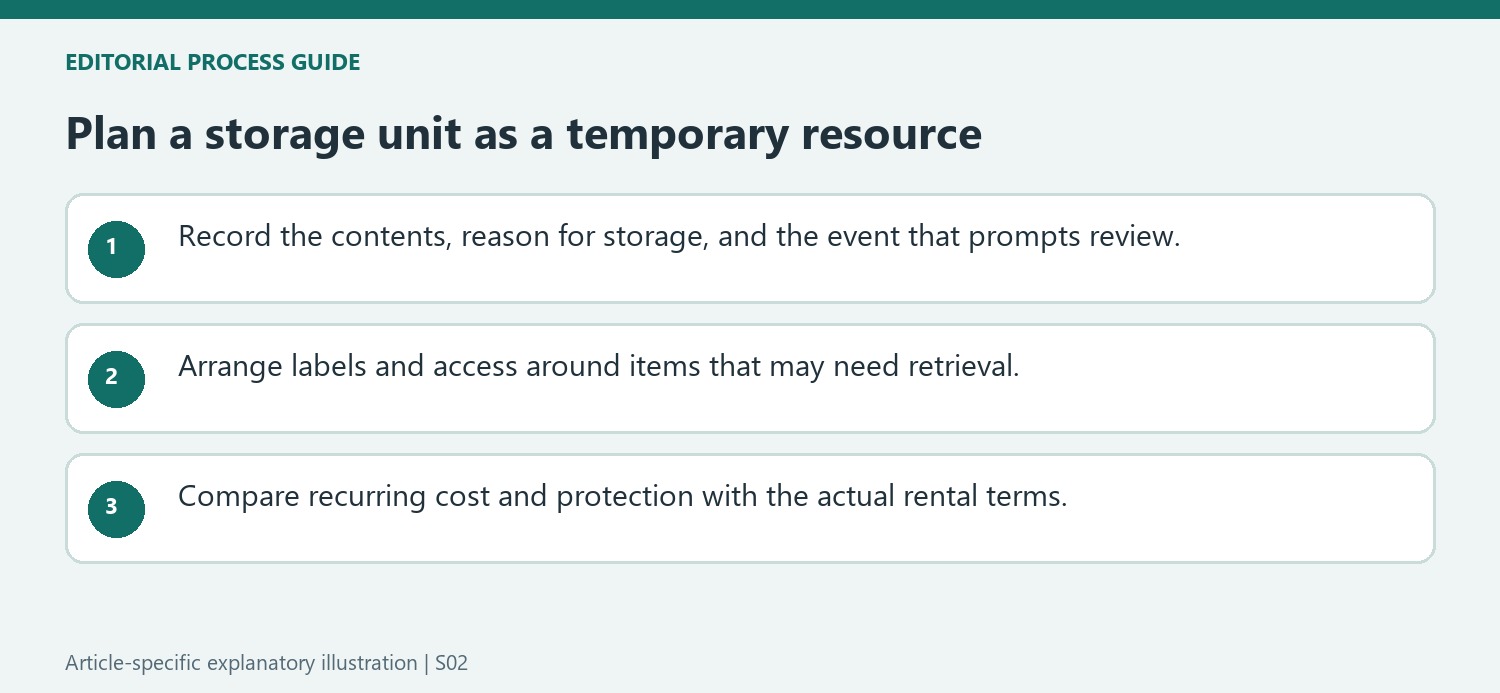
Check protection and contract details explicitly
Plastic bins can offer different protection from cardboard, but no container guarantees freedom from water, pests, or theft. Ask about climate conditions, access, security measures, prohibited contents, and the insurance actually available. Read exclusions and any rate-change provisions before committing. Keep perishables out, inspect drawers for forgotten food, and consider a more appropriate location for irreplaceable mementos.
Set an end point and a review schedule
The source distinguishes temporary storage during a move, renovation, or extended travel from an indefinite overflow habit. Put the intended retrieval or decision date in the plan. Seasonal belongings may need a different visit schedule from furniture awaiting a house move. Historical example prices are not current quotes; compare the total ongoing cost with the value and practical future use of what will remain stored.
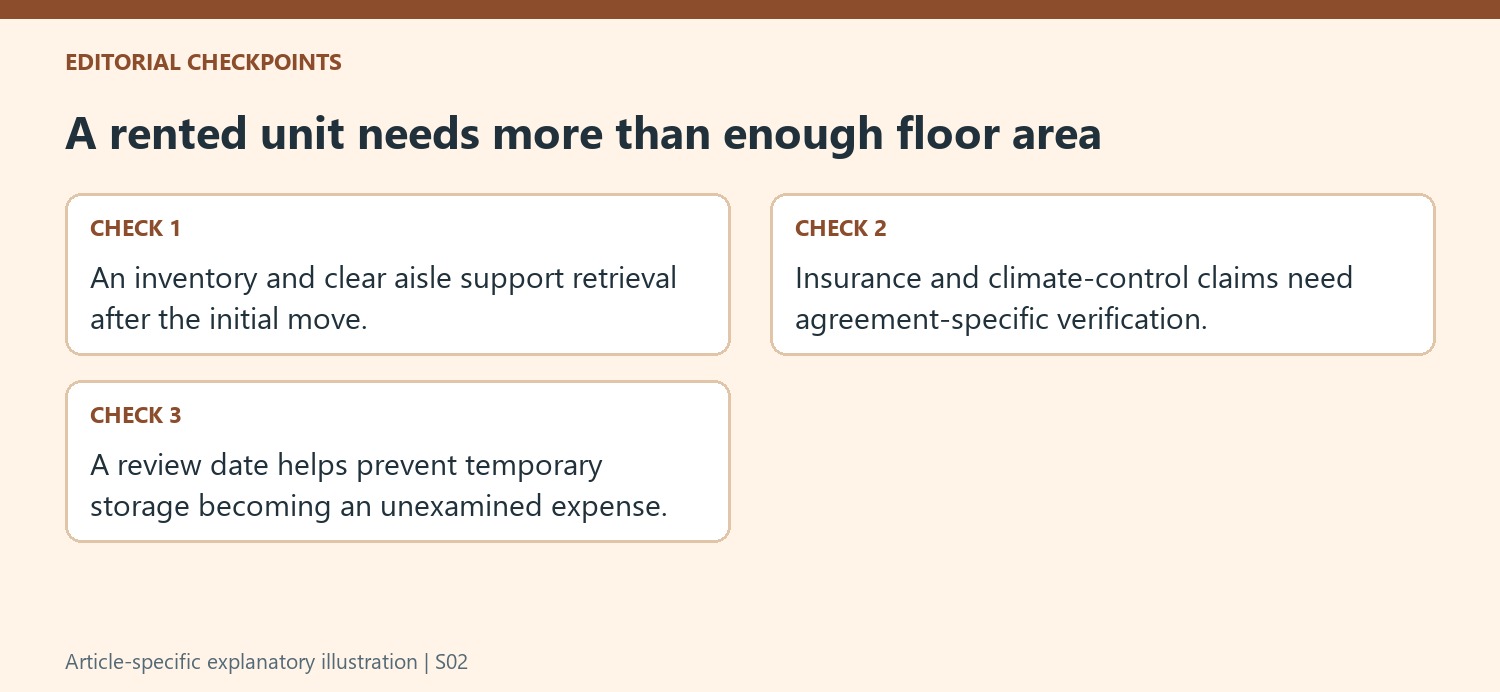
Give temporary storage a defined reason and review date
Jennings King's examples include inherited furniture and the disruption of moving or remodeling. These situations differ from keeping an indefinite overflow of undecided belongings. List what needs temporary accommodation, why it cannot remain at home, and what event will end the arrangement. A move-in date or completed room can provide a useful review point, although delays still need consideration. Declutter before calculating the unit size so that monthly rent does not preserve items already known to be unwanted. Sentimental decisions may need time, but record them as decisions still to make. A specific purpose makes the later choice to retain, rehome, or retrieve the contents more manageable.
Measure the unit around retrieval rather than a packed outline
The source recommends choosing a size appropriate to the contents and keeping access convenient. List the largest pieces, the boxes likely to be needed, and the handling space they require. Shelves, labels, photographs, and an inventory can help, provided they reflect the actual arrangement. Leave a usable aisle instead of making a frequently needed box reachable only by unloading everything in front of it. Check furniture drawers for forgotten contents before storage and exclude perishables. Irreplaceable keepsakes also deserve a separate decision about whether this location is appropriate. The goal is to preserve a clear, retrievable set of possessions, not simply to fit the highest possible number of containers behind the door.
Review ongoing cost and protection against the actual agreement
King discusses security, climate control, and insurance, but those terms do not establish identical protection at every facility. Ask what the particular unit and rental agreement provide, what the insurance covers, and which exclusions or conditions apply. Published price examples are context rather than a current quote for the reader's location. Compare the full recurring cost, relevant fees, likely rate changes, and the transport needed for visits. Set a reminder to reconsider the contents before another period of automatic payment passes. If the original temporary reason has ended, arrange retrieval or disposition rather than allowing the unit to become a permanent substitute for decisions. A smaller retained inventory may reduce later storage requirements, but confirm availability and terms before assuming a move between units is easy. The practical test is whether the service still serves its stated purpose at an acceptable ongoing cost.
References
- A Pro Organizer Reveals the Things to NEVER Keep in Your Storage Unit. House Beautiful; Susannah Bradley.
House Beautiful's interview with organizer Jennings King describes storage units as useful during moves, renovations or extended travel.


Leave a Comment